

Roughly one in eight American homeowners carries delinquent property taxes at some point in their lives, according to estimates from housing policy researchers — and many of them, like Doris Kessler, never saw it coming. Upper-middle income. Employed. No mortgage. And still, somehow, on the edge of losing the house she’d lived in for nineteen years.
I met Doris on a grey Tuesday morning in February 2026 at a free tax preparation clinic run by a local nonprofit in Midtown Memphis. She was sitting near the back of the room in a burgundy scrubs jacket, filling out a worksheet with the focused intensity of someone trying to hold several things together at once. When I introduced myself and mentioned I was reporting on housing and financial stability, she looked up and said, almost without hesitation, “You want a story? Pull up a chair.”
A House That Was Supposed to Be the Safe Part
Doris Kessler is 55, a dental assistant with a regional practice in East Memphis, and has been widowed since 2019 when her husband Raymond passed from a cardiac event at 58. Her two adult children — a son in Nashville and a daughter in Atlanta — are financially independent. She owns a three-bedroom craftsman home in the Berclair neighborhood outright. No mortgage. That house was supposed to be the one thing in her life that was settled.
Her take-home income sits at roughly $68,000 annually. That’s comfortable by most measures in Memphis, where the median household income hovers around $43,000. But Doris will tell you fast that income and financial stability are not the same thing.
The trouble started in late 2022, when Doris cosigned an $18,500 auto loan for a close friend named Carla — someone she’d known since their children were in elementary school together. “I thought it was a favor,” Doris told me, her voice steady but careful. “Carla had the job, she had the plan. I was just the name on the paper.” By early 2023, Carla had stopped making payments entirely. By summer, the lender came after Doris.
The repossession wiped out roughly $11,200 of the loan balance when the car sold at auction. The remaining deficiency — $7,300 — landed squarely on Doris. Combined with collection fees and a credit score that dropped from 741 to 588 in a single reporting cycle, the fallout cascaded fast.
How Property Taxes Slipped Through the Cracks
When I asked Doris to walk me back through the specific moment things got unmanageable, she paused before answering. It wasn’t one moment, she said. It was a slow bleed that she kept patching with short-term decisions.
After the loan deficiency hit, Doris began cycling through personal credit cards to cover monthly expenses while she paid down the $7,300 debt. Her Shelby County property tax bill — approximately $2,050 per year on her assessed home value — got quietly deprioritized. First one year. Then a second.
By January 2026, Doris owed approximately $4,200 in back property taxes and penalties — and had received a formal notice from the Shelby County Trustee’s office that her property was eligible for inclusion in an upcoming tax lien certificate sale. In Tennessee, once a property enters that process, third-party investors can purchase the tax lien and begin proceedings to eventually take title.
“I read that letter three times,” she told me. “I kept thinking, this can’t be about my house. This house has no mortgage. I own this house.” Ownership, she learned, offers no immunity from a government tax claim.
What the Tax Clinic Uncovered
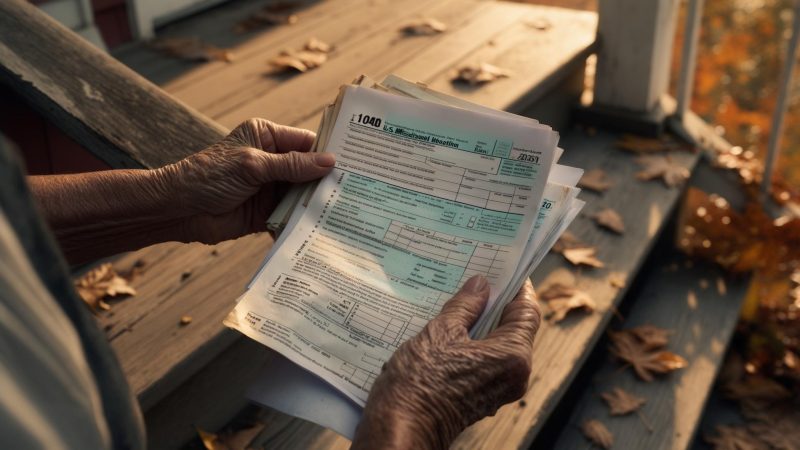
Doris came to the Midtown tax prep clinic not because she expected help with the property tax delinquency but because she wanted to file her 2025 federal return and hoped a refund might partially offset what she owed. A volunteer counselor at the clinic — a retired accountant named Harold — was the first person to ask her directly whether she’d explored local housing assistance programs.
She hadn’t. She didn’t think she qualified. At $68,000 a year, Doris assumed she was above any meaningful threshold for government help. Harold walked her through two programs she’d never heard of.
Doris did not qualify for the Tennessee Property Tax Relief Fund outright — the income threshold for her age bracket (under 65) is significantly lower than her earnings. But the housing counselor connected her with a HUD-approved agency in Memphis that helped her apply for the emergency installment plan with the county and dispute $380 in duplicate penalty charges that had been improperly stacked on her account.
The Outcome — and What It Cost Her
When I followed up with Doris in mid-March 2026, she had entered a 12-month installment plan with the Shelby County Trustee’s office: $350 per month, bringing her total payment to $4,200 by February 2027. The lien sale notice was suspended. Her home was, for now, no longer at risk.
But Doris is careful not to frame this as a clean ending. “I didn’t get rescued,” she said. “I got a payment plan. There’s a difference.” She’s still carrying approximately $6,400 in credit card debt from the period when she was managing Carla’s loan fallout. Her credit score has climbed back to 624, but she describes her financial posture as fragile.
The new federal legislative environment adds additional pressure to the picture. As noted by reporting on new federal work rules impacting welfare programs across Southern states, the safety net for working-age adults is tightening at precisely the moment when financial shocks are pushing more middle-income earners toward the edge. Doris, who works full-time, would not face SNAP work requirements — but she represents a category of person the system doesn’t have a clean answer for: not poor enough for most programs, not stable enough to absorb a financial hit alone.
She told me she’s started a small side project — refinishing and reselling vintage furniture she finds at estate sales — partly for income and partly, she admitted with a laugh, because she needs somewhere to put the energy when the anxiety gets loud. “I can’t just sit still when things feel out of control,” she said. “I have to build something.”
What Doris’s Story Reveals About the Middle-Income Gap
Doris Kessler’s situation illustrates a structural gap that housing researchers have documented with increasing urgency. According to Harvard’s Joint Center for Housing Studies, in 2023 a record 22.6 million renter households — half of all renters — were cost-burdened. For homeowners without mortgages, the data is less visible, but the vulnerability is real: a single financial shock can undo years of stability.
Programs like HUD’s housing counseling network exist specifically for moments like Doris’s. But they are chronically underutilized, particularly by working adults who assume they earn too much to ask for help. The assumption is often wrong.
As I left the tax clinic that February morning, Doris was still at the table, now helping another woman — a retired teacher who’d brought a folder of unopened mail — sort through what was urgent and what could wait. It was a small, unsolicited act of steadiness from someone who’d spent two years barely keeping her own floor from giving way.
Doris’s story doesn’t resolve with a windfall or a forgiven debt. It resolves with a manageable payment and a narrowly avoided disaster. For a lot of people in her position, that is the best outcome available — and it only happened because she walked into a room she almost didn’t enter, and someone asked the right question.



Leave a Reply