
The federal student loan landscape shifted dramatically again in early 2026, with income-driven repayment (IDR) plans still recovering from the legal battles that suspended the SAVE plan for much of 2024 and 2025. For millions of borrowers, the uncertainty was paralyzing. For Grace Pruitt, it was just the latest chapter in a story that had been unfolding — quietly, painfully — since 2009.
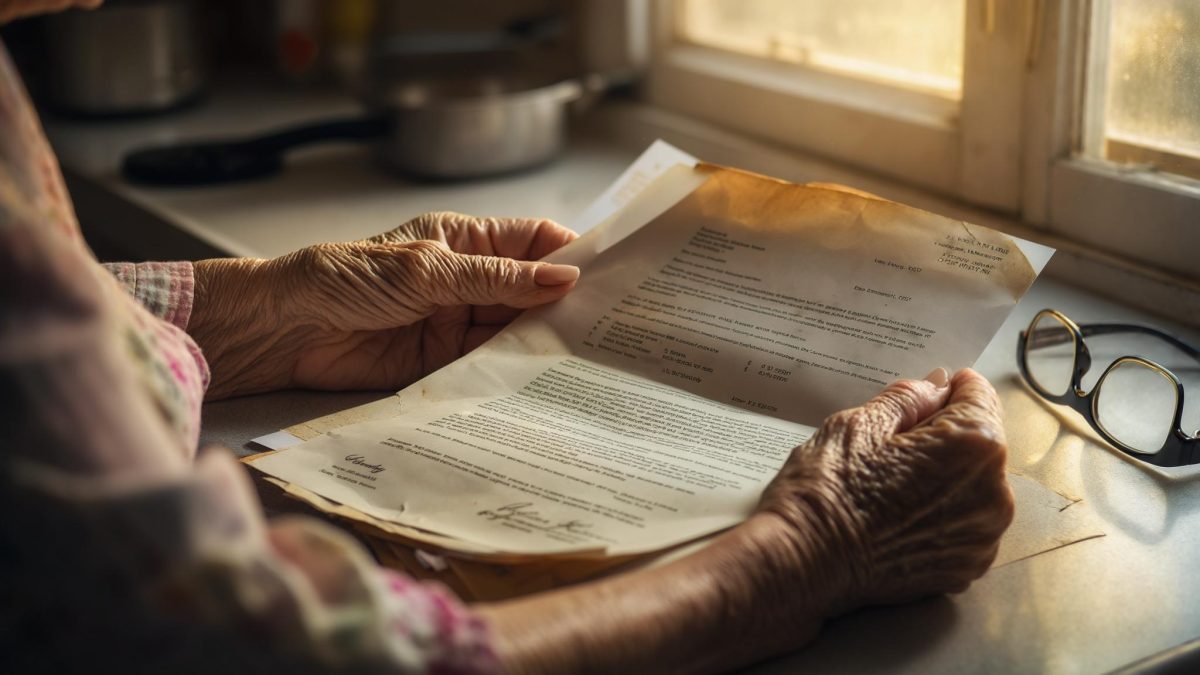
I met Grace through a neighbor who mentioned her situation at a block party last October. She had been navigating federal student loan repayment for nearly three years on her own, and she agreed to sit down with me at her kitchen table in Jacksonville’s Riverside neighborhood one Thursday afternoon in March 2026. Her two kids, ages eight and ten, were at school. Her husband, Marcus, was finishing a shift at the pharmacy where he works part-time. Grace poured two cups of coffee and opened a manila folder she’d clearly organized in advance.
A Graduate Degree, Two Decades Later
Grace earned a Master of Science in Accounting from the University of Florida in 2009, borrowing $47,000 in federal Direct Unsubsidized Loans to cover tuition and living expenses during two years of evening coursework. At the time, she was already working full-time as a staff accountant and assumed the degree would accelerate her salary enough to pay the loans off within seven to eight years.
That math held — until it didn’t. A divorce in 2013, remarriage to Marcus in 2016, and two unexpected pregnancies in her late fifties reshaped her financial picture entirely. She entered forbearance twice: once in 2014 during the divorce proceedings, and again in 2019 when medical bills after her younger child’s birth pushed her household budget to its limit. Both times, interest kept accruing. By the time she sat down to look at her loan servicer dashboard in early 2023, the balance read $58,240.
“When I saw that number, I actually laughed,” Grace told me, smoothing the edge of a printout from her servicer. “I had paid for years and somehow owed more than when I started. That was the moment I knew I had been doing this completely wrong.”
Her household income at the time was approximately $90,000 combined — Grace earning roughly $68,000 annually as a senior accountant, Marcus bringing in about $22,000 part-time. Under the standard repayment plan she had defaulted to after her second forbearance ended, her required monthly payment was $623. With a mortgage, two children in elementary school, and a credit score of 591 from missed credit card payments during the 2014 divorce, that payment was technically manageable but practically devastating.
Discovering Income-Driven Repayment — Three Years Too Late
Grace told me she first heard the term “income-driven repayment” from a coworker in late 2022. She had assumed, incorrectly, that IDR plans were only available to borrowers who were unemployed or in financial hardship. As a working senior accountant with two decades of professional experience, she hadn’t considered herself eligible.
That assumption cost her. According to the Federal Student Aid office, IDR plans like Income-Based Repayment (IBR) cap monthly payments at a percentage of a borrower’s discretionary income — typically between 5% and 10% — regardless of employment status, and are available to most federal Direct Loan borrowers.
When Grace finally applied for IBR in March 2023, her calculated payment dropped to $187 per month — a reduction of $436 from what she had been paying. The application itself took her about 45 minutes online through the Federal Student Aid portal, though she told me she spent three weeks beforehand gathering documents she ultimately didn’t need.
The SAVE Plan Disruption — and What It Meant for Grace
Grace’s story doesn’t have the clean arc of a problem solved and forgotten. After switching to IBR in mid-2023, she was encouraged by her servicer to explore the new SAVE (Saving on a Valuable Education) plan, which the Biden administration launched in August 2023 and which would have lowered her payment further — to an estimated $94 per month based on her income.
She applied. She was approved. And then, in the summer of 2024, federal courts blocked the SAVE plan following legal challenges from multiple states. Her enrollment was suspended. According to reporting by NPR, millions of borrowers enrolled in SAVE were placed into an interest-free forbearance while litigation continued — which sounds like a benefit, but Grace described it differently.
“The forbearance doesn’t count toward forgiveness,” she explained, leaning forward across the table. “I’m 67. I have been paying on these loans for fifteen years. Every month I’m in forbearance is a month that doesn’t count toward the 25-year forgiveness clock. That’s not nothing. That’s real.”
The Forgiveness Clock and What Grace Is Watching Now
Under IBR, borrowers who took out loans for graduate programs are eligible for forgiveness of any remaining balance after 25 years of qualifying payments, according to the Federal Student Aid office. For Grace, who made her first qualifying IBR payment in April 2023, that clock started relatively recently. She is watching it carefully.
As of early 2026, Grace has returned to IBR following the collapse of the SAVE plan. Her monthly payment is $194 — slightly higher than her initial IBR calculation due to a modest salary increase in 2025. She has approximately 22 years remaining on her forgiveness clock, assuming consistent qualifying payments and no further plan disruptions.
The math is not entirely comforting. Grace would be 89 years old by the time her standard 25-year IBR forgiveness clock expires — a fact she acknowledged with a dry laugh. “Obviously I’m hoping for something to change before then,” she said. “But I’m also an accountant. I plan for what’s in front of me, not what I wish were true.”
What she told me she regrets most is not the debt itself, but the years she spent on the wrong repayment plan without knowing alternatives existed. “I lost probably $40,000 in overpayments,” she said, doing the mental arithmetic as we spoke. “That money could have been in a 529 for my kids. That’s the part that sits with me.”
What Grace’s Story Reveals About the System
Grace Pruitt is not a cautionary tale about reckless borrowing. She is a credentialed professional who borrowed a reasonable amount for a graduate degree, worked consistently for decades, and still found herself confused, overcharged, and poorly informed by a system that depends on borrowers navigating it correctly on their own.
Her story is also not unique. The Consumer Financial Protection Bureau has documented widespread servicer errors and communication failures affecting IDR enrollment. Borrowers who were eligible for lower payments went years without knowing it, in some cases accumulating thousands of dollars in unnecessary payments.
- Grace spent approximately 8 years on a standard repayment plan before learning IDR plans existed
- Her payment dropped by $436/month the month she switched to IBR
- Two forbearance periods — totaling roughly 18 months — added an estimated $11,000 to her balance through capitalized interest
- The SAVE plan suspension placed her in a non-qualifying forbearance, pausing her forgiveness clock
When I left Grace’s house that afternoon, she walked me to the door and said something I’ve thought about since. “My kids are going to go to college someday,” she said. “I will make sure they know every single option before they sign anything.” She said it without bitterness — more like someone who had earned the right to say it.
The federal student loan system remains in flux as of April 2026, with the SAVE plan’s legal status still unresolved and the Department of Education under significant political and budgetary pressure. For borrowers like Grace — older, working, not easily categorized by the system — the path forward requires active research, annual IDR recertification, and a willingness to track a forgiveness clock that may stretch decades. None of that is simple. None of it should have to be.
Related: She Owed $47,000 in Student Loans and Faced a 30% Rent Hike. Then a Tax Clinic Changed Her Math.
Related: A Baltimore Mechanic With $47,000 in Student Debt Told Me the Tax Credit He Nearly Missed at 59



Leave a Reply