
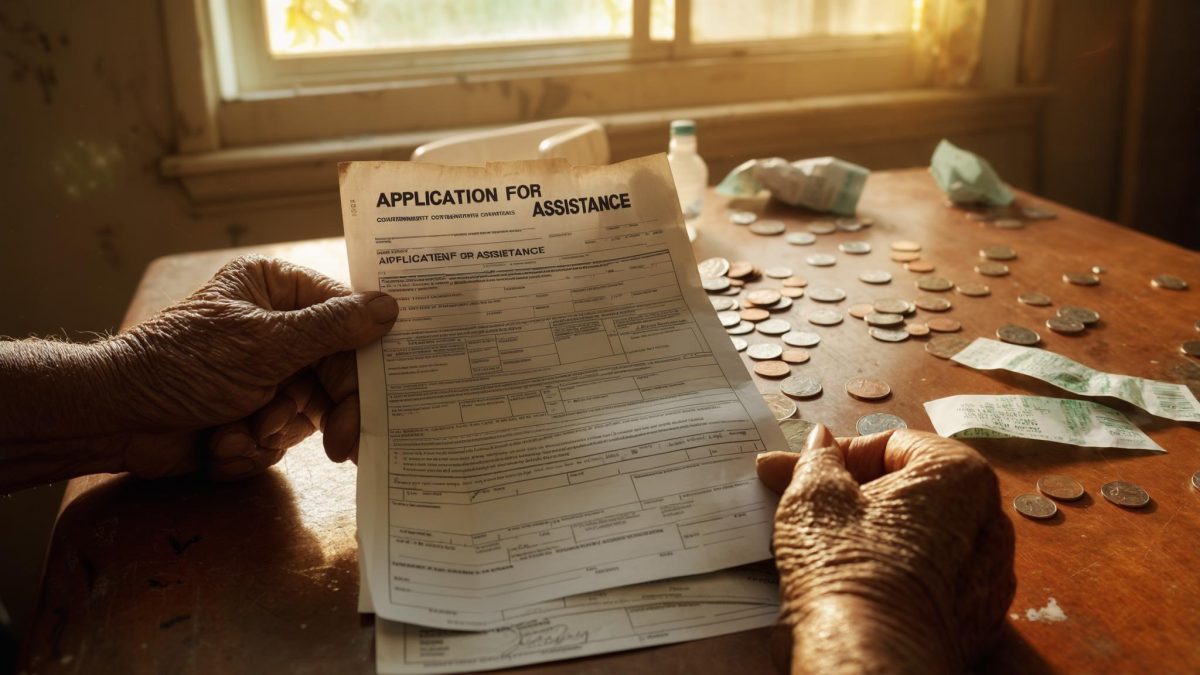
Roughly 42 million Americans receive SNAP benefits in any given month, according to USDA Food and Nutrition Service data — yet participation rates among working households with children remain stubbornly low, partly because many earners assume a steady paycheck disqualifies them. Carlos Mendez assumed exactly that. He was wrong, and it cost him nearly two years of unnecessary financial pain.
I met Carlos at a coffee shop in Little Havana on a Tuesday afternoon in late February 2026. He arrived in a collared shirt, the kind worn by someone who has spent decades presenting a certain professional image. He ordered a small coffee and apologized, almost reflexively, for being five minutes late — he’d come straight from a lunch shift at the mid-size restaurant he now manages in Coral Gables. He looked tired in the way that middle age and financial stress compound each other, but he was composed, deliberate with his words, and generous with his time.
The COVID Collapse Nobody Talks About at 54
When I asked Carlos to take me back to the beginning, he didn’t start with the pandemic. He started with his savings account. “I had just over $31,000 saved,” he told me. “At 53, I thought I was doing okay. Not great, but okay. Then the restaurant closed in March 2020, and that number just started bleeding out every single month.”
Carlos had managed a popular Cuban-fusion restaurant in Brickell for eleven years. When the doors closed for what the owners initially called a temporary pause, he received no severance. He filed for unemployment through Florida’s notoriously strained CONNECT system and, after weeks of failed logins and dropped calls, eventually received benefits — though he described the process as “a second job just to get paid.”
The restaurant never reopened. By month fourteen, the $31,000 was gone — consumed by rent in Miami, groceries for a household of six, and the slow financial hemorrhage of a family that doesn’t cut corners on feeding its kids. Carlos landed a new management role in mid-2021, but at a salary roughly $14,000 lower than what he’d earned before. The household had never fully recovered from the gap year, and the lower income was widening the hole rather than filling it.
A Blended Family, Four Kids, and an Unreliable Check in the Mail
Carlos has two biological children from his first marriage — a son, 19, and a daughter, 17. His wife, Marisol, has two children from her previous marriage: a 14-year-old and a 12-year-old. All four live in their three-bedroom apartment in Hialeah. That’s a household of six on one primary income, with a secondary income stream that Carlos describes as “weather-dependent.”
The weather he’s referring to is Marisol’s ex-husband. A court order requires monthly child support payments of $680. In reality, Carlos told me, payments arrive when they arrive — sometimes two months late, sometimes not at all, sometimes in partial amounts. “We’ve gone to court twice,” he said quietly. “The judge orders it. He pays for a while. Then it stops again. You can’t plan a grocery budget around something that might not come.”
This internalized reluctance — the idea that government assistance is for someone else, someone worse off — is one of the most documented barriers to SNAP enrollment among working-age adults. According to the Center on Budget and Policy Priorities, more than 30 percent of SNAP participants live in households with earnings from work. Carlos fit this profile precisely, but he didn’t know it yet.
What the Income Limits Actually Mean for a Family Like His
For Florida SNAP applicants, eligibility is primarily determined by gross monthly income relative to the federal poverty level. A household must generally fall at or below 130 percent of the federal poverty level to qualify — though households with elderly or disabled members may face different rules. For a family of six, that threshold in federal fiscal year 2025 was approximately $4,625 per month in gross income, according to USDA SNAP eligibility guidelines.
Carlos’s gross monthly take-home from his management role was approximately $3,900. On months when Marisol’s ex paid, total household income approached $4,580. On months he didn’t — which was more often than not — Carlos’s $3,900 placed the family of six squarely within the SNAP gross income threshold. Even accounting for the court-ordered support being averaged in, the household net income after allowable deductions (rent, utilities, dependent care) could bring the benefit calculation down further.
The maximum SNAP benefit for a household of six in fiscal year 2025 was $1,155 per month. The actual benefit Carlos’s family would receive — calculated based on net income — was lower than that ceiling, but still meaningful. What he needed was someone to walk him through the math. That person turned out to be a caseworker at a local nonprofit.
The Afternoon That Changed How He Thought About Asking for Help
Carlos told me he had driven past the Camillus House resource center on NW 1st Avenue many times without going in. One afternoon last spring, after a particularly brutal week — the ex had missed two consecutive payments, his daughter needed new school supplies, and he’d transferred money from his checking to his savings and back again three times trying to make the rent — he parked and walked inside.
“The woman at the nonprofit, she just sat down with me and started asking questions,” Carlos recalled. “She didn’t make me feel embarrassed. She just treated it like math — which it is.” Within forty minutes, the counselor had run a preliminary screening showing Carlos likely qualified. She helped him gather the documents he’d need: pay stubs, lease agreement, utility bills, the child support court order, and six months of bank statements showing actual child support received.
The Florida ACCESS portal — the state’s online benefits application system managed by the Department of Children and Families — processed his application over several weeks. There was one snag: DCF wanted documentation proving that child support payments were inconsistent rather than simply unpaid. Carlos submitted his bank records showing the irregular deposits. After a follow-up phone interview in May, the approval came in June 2025.
What $412 a Month Actually Means
The benefit Carlos’s household was approved for was $412 per month — not the maximum, because his income placed him above the net income floor, but enough to move the needle in a real way. I asked him to put a number on it.
He’s candid that the benefit doesn’t solve the underlying problem. His savings are still essentially zero. At 55, he’s acutely aware that retirement is not an abstraction. His adult son is preparing to start community college in the fall, which carries its own costs. And Marisol’s ex has, predictably, gone quiet again — two months without a payment as of the time we spoke.
Carlos’s SNAP benefit is recertified every twelve months through Florida DCF. He’ll need to resubmit income documentation and prove continued eligibility. If the child support situation stabilizes — if the ex pays consistently and pushes average monthly household income above the threshold — the benefit amount would decrease or disappear entirely. That’s the design of the program, and Carlos understands it. What frustrates him is the inverse: that the most financially precarious months, the ones when support payments vanish, are also the months the EBT card matters most.
When I asked Carlos what he’d tell another working parent in his position — someone earning a paycheck and convinced they don’t qualify — he paused longer than he had for any other question. “I’d tell them to go find out,” he said finally. “Don’t assume. That assumption cost me probably two years of help I was entitled to. I was too proud, and my kids paid for my pride. That’s the honest truth.”
I left our conversation thinking about the quiet math of middle age and migration and blended families — the complexity that standard eligibility language rarely captures. Carlos Mendez is not a tragic figure. He is a competent man who got squeezed by circumstances most Americans would recognize and still managed to keep his family fed, enrolled in school, and housed. The SNAP card in his wallet doesn’t change what that took. It just makes the arithmetic slightly less brutal each month.
Related: He Burned Through $31,000 in Savings During COVID. At 55, SNAP Was the Last Safety Net for His Blended Family of Six




Leave a Reply