
Have you ever filed paperwork expecting a long fight, and instead discovered the battle was already over? That’s exactly what happens to a growing number of public service workers who apply for Public Service Loan Forgiveness (PSLF) and find out their loan balances are dramatically lower than expected; sometimes by tens of thousands of dollars, according to studentaid.gov. The shock isn’t always bad news. Sometimes it’s the best financial surprise of your life.
This article breaks down how that happens, why it’s more common than people realize, and what steps you need to take right now if you work in public service and haven’t checked your PSLF status recently.
What Is the PSLF Discovery Moment: and Why Does It Happen?
The PSLF program was established by Congress to encourage Americans to pursue careers in public service by offering a clear financial reward: after 120 qualifying monthly payments while working full-time for a qualifying employer, the remaining federal student loan balance is forgiven, with no cap on the forgiven amount. That last part matters enormously. According to the NEA, there is no limit to how much PSLF can forgive.
The “discovery moment” happens because many borrowers lose track of their loan servicer history, income-driven repayment (IDR) adjustments, and payment counts over a decade or more of service. When they finally log into StudentAid.gov to submit their PSLF form, they see a balance that’s already been reduced; sometimes dramatically, through a combination of IDR adjustments, account corrections, and retroactive payment counting that the Department of Education applied in recent years.
The IDR adjustment reviewed borrower payment histories going back years and credited months that previously didn’t count, periods of deferment, forbearance, and payments made under non-qualifying plans. For a borrower with $87,000 in loans who had been in repayment for 12 or 15 years, the math could work out to a zero balance before they ever clicked “submit” on their forgiveness application.
| Loan Forgiveness Route | Qualifying Payments Required | Forgiveness Cap | Tax on Forgiven Amount |
|---|---|---|---|
| PSLF | 120 (10 years) | None | Federally tax-free |
| IDR Forgiveness (standard) | 240–300 (20–25 years) | None | Taxable (varies by state) |
| Teacher Loan Forgiveness | 5 years of service | $17,500 | Federally tax-free |
| IDR Account Adjustment (one-time) | Retroactive; varies | None | Federally tax-free if via PSLF |
Has This Happened to Anyone Else?
Yes, and more often than the mainstream conversation around student loans suggests. Online communities dedicated to PSLF are full of accounts from teachers, nurses, social workers, and government employees who logged into their accounts expecting to start a long countdown and instead found their balance already at or near zero.
Reports from Reddit’s student loan communities show borrowers discovering forgiven loans appearing on their credit reports; sometimes confusingly coded as discharged debt rather than paid-in-full accounts. Some borrowers have also received notices that forgiveness was reversed and balances reinstated, a situation Forbes reported on as servicer errors created chaos in 2024 and 2025. As of March 2026, those reversals remain a live risk for some accounts, which is why documentation is non-negotiable.
“I have gotten $80K forgiven and have now helped get my clients over $2.6 million in loan forgiveness and helped many get manageable plans.”, PSLF borrower advocate, Facebook community
The pattern is consistent: borrowers who spent years making payments under income-driven plans, often without formally tracking their PSLF progress, are arriving at the application stage to find the IDR adjustment already did the heavy lifting. For someone carrying $87,000 in federal debt across graduate and undergraduate loans, a decade of IDR payments; even small ones based on a modest public-sector salary, can erode principal faster than expected, especially when retroactive credit is applied.
How Does the PSLF Discovery Process Actually Work?
Understanding the mechanics helps set realistic expectations. PSLF doesn’t operate on a single trigger; it’s a layered process involving your loan type, your repayment plan, your employer’s status, and your payment history. Here’s how the discovery unfolds in practice.
The forgiven amount under PSLF is federally tax-free. That’s a significant distinction from standard IDR forgiveness, which can create a large taxable event at the end of a 20- or 25-year repayment period. For a borrower who has $87,000 forgiven under PSLF, there’s no federal tax bill attached to that relief.
Why Does This Discovery Matter So Much Right Now?
The stakes around PSLF have never been higher; or more politically volatile. The program has faced repeated legal and administrative challenges, and as of March 2026, borrowers who qualify should move quickly to document and finalize their forgiveness rather than waiting for a more convenient moment.
For public service workers carrying significant debt, the financial impact of PSLF forgiveness is life-altering in ways that compound over time. Consider a nurse with $87,000 in loans earning $62,000 annually. Under an income-driven plan, monthly payments might run $200 to $400 depending on family size and plan type.
Over 10 years, that’s roughly $24,000 to $48,000 paid, and the remaining balance, potentially still close to the original principal due to interest accumulation, gets wiped. The net benefit can easily exceed six figures when you factor in interest that would have accrued over a standard 25-year repayment timeline.
The difference between IBR and a standard repayment plan can reach $200 to $400 per month for a borrower earning $55,000 annually with $70,000 in debt; a gap that compounds significantly over a decade. Multiply that by 120 months and the savings from being on the right plan, combined with ultimate forgiveness, becomes a defining financial event.
Beyond the individual, this matters because PSLF was designed with a specific policy goal: to make public service careers financially viable for people who took on debt to earn professional degrees. Teachers, social workers, public defenders, and public health workers are systematically underpaid relative to private-sector peers. PSLF was the legislative acknowledgment of that gap. Discovering $87,000 already gone isn’t a glitch, it’s the program working exactly as Congress intended when it established PSLF, as outlined on the White House’s policy framework.
What to Do If You Think Your Balance Might Already Be Gone
Don’t assume. Verify. The process is straightforward but requires you to act rather than wait for a letter that may never arrive.
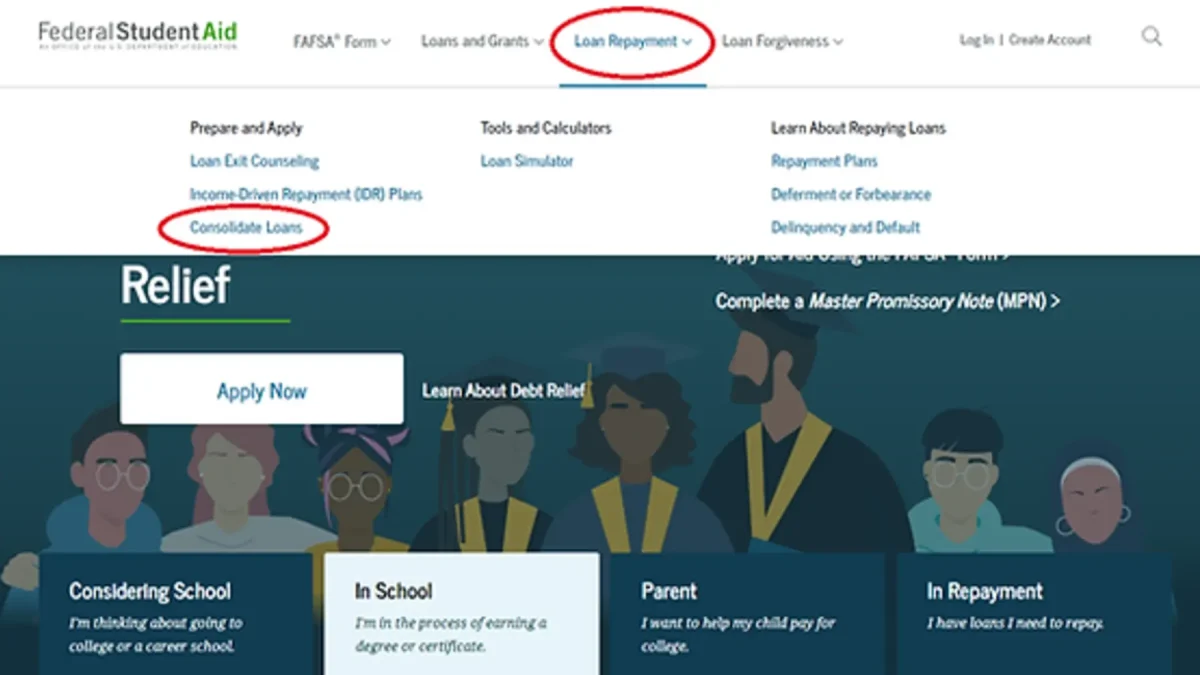
- Log into StudentAid.gov today and check your PSLF payment tracker. If you’ve been in public service for 8 or more years, your count may already be at or near 120.
- Pull your credit report from AnnualCreditReport.com and look for discharged or forgiven loan entries. Some borrowers discover forgiveness happened without any direct notification.
- Contact MOHELA directly at 1-855-265-4199 if your account shows a balance discrepancy or if your payment count doesn’t match your employment history.
- Submit an updated Employment Certification Form even if you think you’re close to qualifying. Gaps in certification can delay processing by months.
- Consult the CFPB’s student loan resources at consumerfinance.gov if you believe your servicer has made an error or reversed a forgiveness decision incorrectly.
For borrowers who have already received forgiveness confirmation and then seen their balance reinstated; a real scenario that emerged in 2024 and 2025, the path forward involves filing a formal dispute with your servicer and escalating to the Federal Student Aid Ombudsman if the servicer doesn’t resolve the error within 60 days.
The $87,000 discovery story isn’t an anomaly. It’s a window into how the intersection of the IDR adjustment, PSLF payment counting, and years of public service can produce a financial outcome that feels impossible until you see it on your own account screen. Check yours.
More Stories Like This
- 120 On-Time Student Loan Payments Meant Nothing — The Department of Education Denied Forgiveness Over a Form Most Borrowers Have Never Heard Of
- Student loan borrowers who rushed to enroll in SAVE before the deadline may be overpaying — one person who missed it accidentally saved $18,000 ( benefitreporter.org)
- A 2-Hour VA Call About Hearing Aids Uncovered $30,000 in Back Pay He Never Knew He Was Owed, according to benefitreporter.org



Leave a Reply