
Have you ever been too financially comfortable to qualify for help, yet too stretched to actually feel secure? That particular middle ground — the one where pride and anxiety share a sofa — is where I found Yolanda Gantt on a warm Tuesday morning in late March 2026.
A financial counselor at a Phoenix-area nonprofit had quietly passed along Yolanda’s name, saying only that her situation was one more families needed to hear about. I reached out, half expecting a polite refusal. Instead, Yolanda agreed almost immediately. “I’ve been carrying this alone for two years,” she told me over the phone. “Maybe it’s time someone else knew.”
When I sat down with Yolanda Gantt at a coffee shop near her home in the Ahwatukee Foothills neighborhood of Phoenix, she arrived ten minutes early, ordered nothing, and folded her hands on the table like someone about to give a deposition. She is 42, a licensed pharmacy technician with fifteen years of marriage behind her and two grown children recently out of the house. By most metrics, her household is doing fine. Until, she explained quietly, it wasn’t.
The Moment the Numbers Stopped Adding Up
Yolanda’s husband, Marcus, retired from his project management role at a construction firm in September 2024 — about three years earlier than either of them had planned. A combination of burnout and a chronic knee condition made continuing untenable. At 58, he stepped away from a salary of roughly $74,000 a year.
Yolanda’s income as a pharmacy technician sat at approximately $51,000 annually. Together, they had been comfortable. Separately carrying the household, she was not. “We went from $125,000 a year to $51,000 overnight,” she told me. “I know that still sounds like a lot to some people. But we had a mortgage, HOA fees, two car payments that weren’t paid off. The math just didn’t work.”
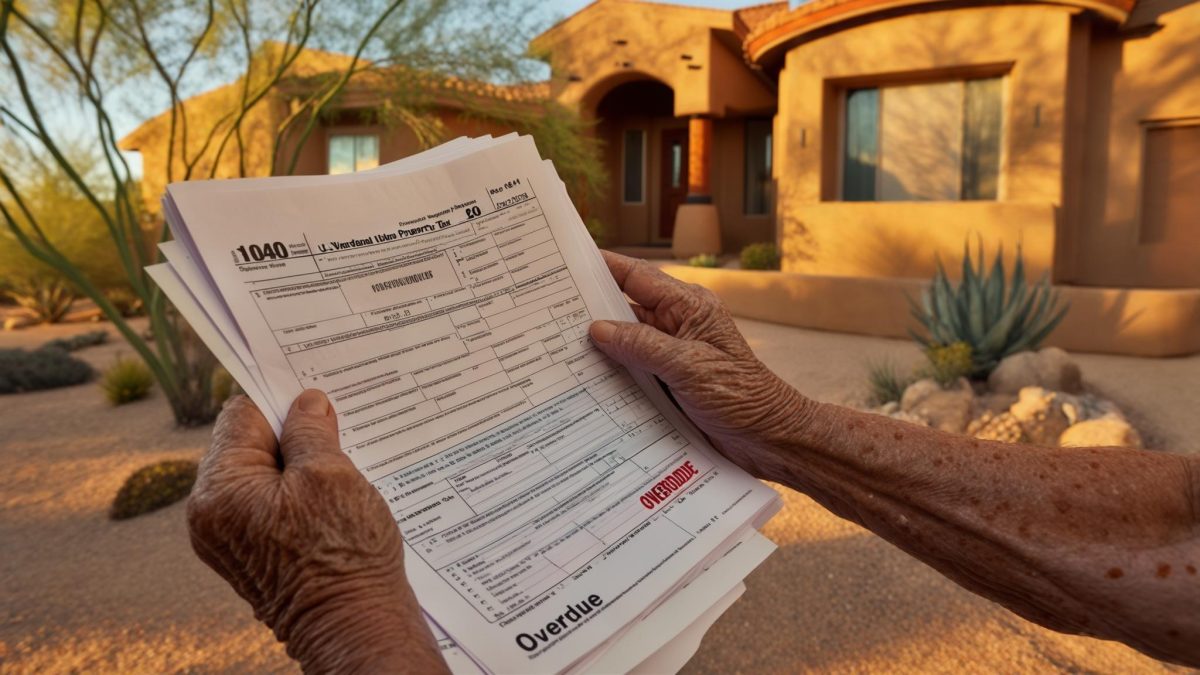
The first thing that slipped was the property tax bill. In Maricopa County, residential property taxes are billed twice a year — first half due in October, second half in March. Yolanda missed the October 2023 payment. Then the March 2024 payment. Then October 2024. By early 2025, she was $4,200 in arrears, with interest accumulating at a rate set by Maricopa County Treasurer’s Office policy.
“I kept telling myself I’d catch up next month,” she said. “Next month turned into eighteen months.”
The Wall That Upper-Middle Income Families Hit
One of the least-discussed dynamics in public assistance is what happens to families who earn too much to qualify for most programs, yet too little to self-correct after a major income disruption. Yolanda landed squarely in that gap.
She looked into Arizona’s Low Income Home Energy Assistance Program — she didn’t qualify. She researched federal rental assistance under HUD — she owns her home. The property tax–specific programs she found through the Arizona Department of Revenue, such as the Senior Property Valuation Protection Program, required applicants to be at least 65 years old. At 42, she was more than two decades away from eligibility.
“Every time I found something, there was an age requirement or an income cap I blew past,” Yolanda told me, her voice measured but tight. “I started to feel like the system was designed for people who had already hit rock bottom. I wasn’t there yet. I was just… tipping.”
This is the emotional core of what the financial counselor wanted me to understand when she referred Yolanda’s story. The anxiety of the middle tier is real, and it is underreported.
What She Actually Found — and What It Cost Her to Ask
The turning point came in January 2025, when Yolanda received a certified letter from the Maricopa County Treasurer warning that her property could be subject to a tax lien sale if the delinquency continued. That letter, she said, was the first time she cried about the situation out loud.
She called the Treasurer’s office the next morning. What she discovered was a formal installment payment plan — a structured arrangement that allowed delinquent homeowners to pay back overdue taxes in monthly installments while halting further penalty accumulation, provided payments were made on time.
The monthly repayment amount — roughly $175 — was manageable once Yolanda and Marcus restructured two other household expenses. They suspended contributions to a secondary savings account and reduced one car payment by refinancing. It was not painless. But it was a path.
The Deeper Fear Underneath the Tax Bill
Property taxes were not the only thing keeping Yolanda awake. As I spoke with her further, a second anxiety emerged — one she was even less comfortable naming. With Marcus retired at 58 and their retirement savings totaling approximately $210,000 across two accounts, she had run the numbers herself. They did not add up to comfort.
“Financial planners say you need around $1 million to retire safely, or close to it,” she said. “We’re not close. Marcus gets a small pension — about $800 a month — but that’s it until Social Security kicks in, and that’s years away.” According to the Social Security Administration, full retirement age for those born between 1960 and later is 67, meaning Marcus would not reach full benefits until 2033.
Yolanda is not eligible for Medicaid at her income level, and neither housing vouchers nor SNAP apply to her situation. What she is eligible for — and what the financial counselor ultimately helped her locate — are Arizona’s property tax credit programs for primary residences, which can offset a portion of taxes for qualifying lower-income households. She fell just inside the income threshold for a partial credit in tax year 2025, which reduced her new annual bill by approximately $310.
“Three hundred dollars doesn’t sound like much,” she said. “But when you’re budgeting down to the last forty dollars at the end of the month, three hundred dollars is a car payment. It matters.”
Where Things Stand Now — and What Yolanda Regrets
As of our conversation in late March 2026, Yolanda is fourteen months into her repayment plan. She has not missed a payment. The lien threat has been suspended. Marcus has taken on part-time consulting work — roughly $1,200 a month — which has eased the household budget enough that they are once again making small contributions to their retirement accounts.
The outcome is not triumphant. Yolanda does not describe herself as having solved anything. She describes herself as having bought time. “We stabilized,” she said. “That’s the word I use. We’re not ahead. We’re not behind anymore. We’re just… holding.”
What she regrets is the delay. Two years of letting the balance grow before making a single phone call. The interest penalties alone cost her several hundred dollars she did not have to pay. “Pride is expensive,” she told me, almost to herself, near the end of our conversation. “I kept thinking asking for help meant I had failed. But failing would have been losing the house.”
I left that coffee shop thinking about the distance between those two things — asking for help and failing — and how many people quietly collapse that distance into one. Yolanda Gantt did not fail. She waited too long, and then she made a phone call, and then she held on. That is not a story of triumph. But it is a story worth telling, precisely because it looks so much like the story of someone you know.
Related: When Overtime Vanished and Rent Jumped $380 a Month, One Restaurant Manager Found Help She Didn’t Know Existed
Related: She Was Dropped by Her Insurer and Hit With a 30% Rent Hike at 67 — What One Oklahoma Retiree Found When She Finally Asked for Help




Leave a Reply