
Have you ever done the math on your own home — calculated exactly how long you could go before the county came for it — and still not known what to do next? That question sat with me long after I left a grocery store in South Minneapolis on a Wednesday afternoon in late February 2026, where I’d just spent forty minutes talking to a man named Byron Gantt in the canned goods aisle.
Byron hadn’t planned to talk. Neither had I. But he was studying the back of a soup can with the focused expression of someone doing budget math, and when I mentioned I covered public assistance programs for a living, he looked up and said, quietly, “Then maybe you can tell me something.”
A Conversation That Started Over Canned Goods
Byron Gantt is 52 years old, a long-haul truck driver who has worked out of Minneapolis for most of his adult life. He is methodical in the way that people who spend days alone on interstates tend to become — he thinks in sequences, tracks details, keeps records. When I sat down with him the following Saturday at a diner near Lake Street, he brought a manila folder.
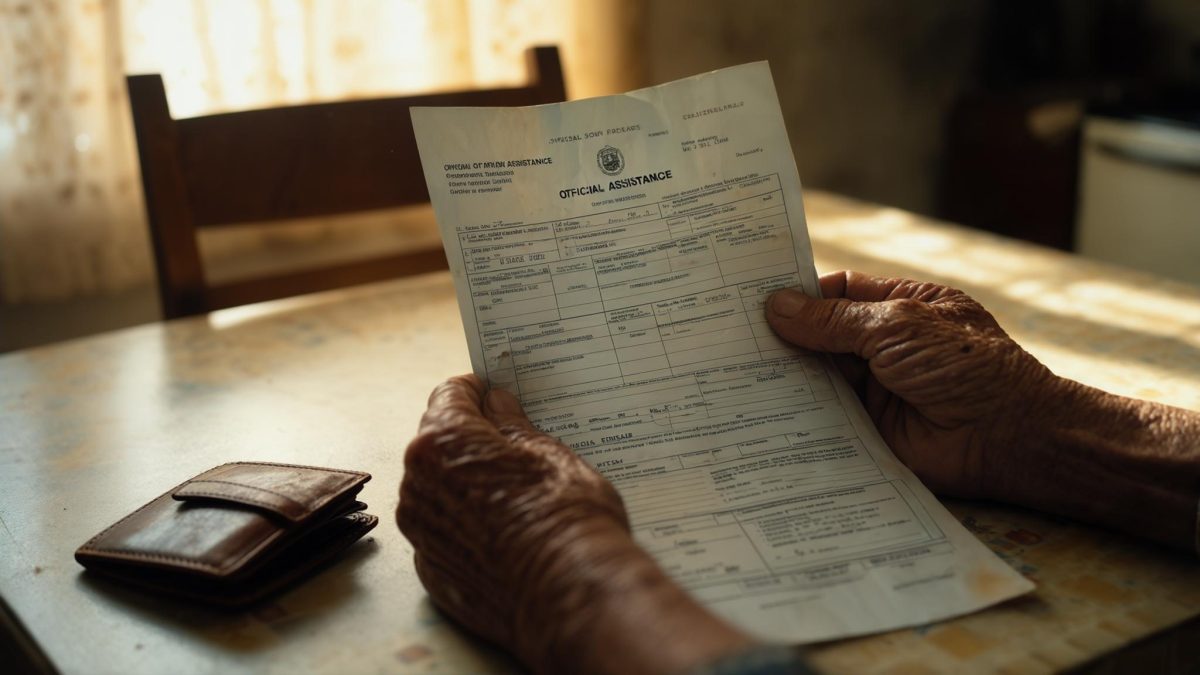
Inside was every property tax statement he’d received since 2021. He had flagged three of them with sticky notes.
Byron has lived in his South Minneapolis home — a two-bedroom bungalow he and his late wife, Darlene, bought in 2004 — for more than two decades. Darlene died in March 2022 after a sudden illness. The medical bills that followed, even with insurance, totaled approximately $22,000 out of pocket. Byron told me he paid most of it, because that felt like the right thing to do. What he didn’t fully account for was what that would cost him later.
Byron earns roughly $68,000 a year, enough to cover his mortgage, his truck insurance, and his bills — in a normal year. But 2022 was not a normal year, and 2023 wasn’t either. He deferred his Hennepin County property tax payments while he worked through the debt, and then deferred them again. By January 2026, he was $3,400 behind.
The Year Everything Shifted
When I asked Byron to walk me through the timeline, he opened the manila folder and laid three statements on the table without being asked. His annual Hennepin County property tax bill comes to approximately $4,200, based on his home’s assessed value of around $218,000. In 2022, he paid only $1,800 of it. In 2023, he paid the full amount but nothing toward the prior balance. By 2024, penalties had added another $340.
Byron told me he knew the county could eventually pursue a tax lien or, in a worst-case scenario, begin a forfeiture process if the debt went unresolved long enough. He’d read enough about it online to scare himself but not enough to know exactly where the line was. “I kept looking it up at two in the morning,” he said. “That’s not a good way to do research.”
What Byron hadn’t done — until January 2026 — was contact anyone official. Not Hennepin County’s property tax office. Not the Minnesota Department of Revenue. Not a housing counselor. He assumed, as he put it, that those resources were “for people worse off than me.”
Running the Numbers in the Dark
As Byron explained his situation over coffee, I noticed he had already done most of the legwork — just in isolation. He had printed out Minnesota’s property tax refund information, made notes in the margins, and then set it aside because he wasn’t sure if his income disqualified him. He earns too much for many low-income programs, but middle-income homeowners are often eligible for tax relief that goes unclaimed because the income thresholds are higher than people expect.
According to the Minnesota Department of Revenue, the state’s Homestead Credit Refund — commonly called the Property Tax Refund — is available to homeowners across a broad income range. For the 2025 filing year, households with incomes up to approximately $128,280 may qualify for some level of refund, with the maximum refund capped at around $2,930 for lower-income filers and a sliding scale applied above that.
Byron’s household income of $68,000 put him solidly within the eligible range. He had simply never filed the M1PR form — the schedule attached to a Minnesota state return that generates the refund — because no one had told him it existed.
Finding Minnesota’s Property Tax Refund Program
After our first conversation, Byron told me he went home and called Hennepin County’s property tax office — something he’d been avoiding for months. He described the experience as “not as bad as I expected,” which, coming from a self-described worrier, I took as high praise. A county representative walked him through the payment plan options for his delinquent balance.
According to Hennepin County’s property tax division, homeowners with past-due balances can apply for a payment agreement that spreads the delinquent amount across up to 36 months, provided they stay current on ongoing tax obligations. Byron was approved for a plan that requires him to pay approximately $95 per month toward the $3,400 balance, while continuing to pay his regular quarterly installments.
When his 2024 M1PR was processed, Byron received a state refund of $1,150 — money he applied directly to the payment plan balance, dropping it to approximately $2,250. The 2023 amended return is still pending as of this writing.
Where Things Stand Now — and What Still Keeps Him Up at Night
When I followed up with Byron in mid-March 2026, his tone had shifted. Not dramatically — he’s not the kind of man who uses the word “relief” without a caveat — but the specific dread about his property had loosened. He had a plan, a number, a monthly payment. That is the currency of his personality: not optimism, but structure.
What remained was the larger anxiety he’d mentioned only briefly the first time we spoke. Byron has approximately $114,000 in a 401(k) from his employer and a small IRA with around $28,000. At 52, he calculates that he needs to drive for at least another 13 or 14 years to have a retirement that doesn’t terrify him. The physical demands of long-haul trucking, he noted, make that timeline feel less certain than the math does.
He also told me he had looked into whether he might qualify for any utility assistance through Minnesota’s Energy Assistance Program to reduce monthly overhead, though he hadn’t yet applied. His income likely places him near the edge of eligibility for that program.
Byron’s story is not a triumph. It is a correction — a man who worked hard, got hit by something outside his control, waited too long out of a misunderstanding about who deserves help, and then found a partial answer. The $1,150 refund didn’t solve his problem. The payment plan didn’t erase the underlying tension between his savings and his timeline. But he is no longer studying property tax statements at two in the morning without knowing what to do next.
As I left the diner, Byron was already putting his folder back in order, sticky notes realigned. He shook my hand and said, with the measured honesty of someone who doesn’t traffic in false endings: “I feel better about this year. Ask me again in five.”
I plan to.
Camille Joséphine Archer is Senior Benefits & Social Programs Writer at Benefit Reporter. This article is reported journalism and does not constitute financial or legal advice.
Related: He Sells Homes for a Living — Then Fell Behind on His Own Property Taxes




Leave a Reply