

The cereal aisle of a Kroger on Westheimer Road in Houston is not where I expected to find my next story. But when I noticed a broad-shouldered man in his early forties methodically punching numbers into a phone calculator before placing each item into his cart, something made me slow down. A brief exchange about grocery prices became a two-hour conversation about workers’ compensation denials, damaged credit, and the quiet indignity of rebuilding your financial life at 42. That man was Clint LaRoche — and two weeks later, we sat down at a coffee shop in the Montrose neighborhood to talk through all of it.
LaRoche is a petroleum engineer, the kind of career that carries a certain image: six-figure stability, energy sector confidence, a financial cushion most people don’t have. For most of his adult life, that image held. He earned $138,000 annually at a mid-size energy firm with operations outside Beaumont, Texas. Then a wet platform, a wrong step, and one insurance adjuster’s decision changed the trajectory of the next two years.
The Injury That the Insurer Said Didn’t Count
Clint described the moment of his injury without drama. In March 2024, he stepped onto a wet platform during a routine drill site inspection, felt something give in his lower back, and drove himself to an urgent care clinic. The diagnosis was a herniated disc at L4-L5 — painful, debilitating, but treatable with rest and physical therapy. What came next, he said, was far harder to recover from.
Six weeks after filing his workers’ compensation claim, in May 2024, his employer’s third-party claims administrator denied it. The stated reason: a pre-existing spinal condition referenced in a routine sports physical from 2019. The insurer argued that notation made the injury non-compensable. Clint filed an appeal the same week. The administrative process, he said, moved at its own pace — and his income did not wait for it.
The timing hit him at an already vulnerable moment. His divorce, finalized in late 2022, had been financially brutal — legal fees, a property settlement, and a significant depletion of savings he had spent years accumulating. His credit score, which once sat comfortably above 720, had dropped to 594 by early 2023. He had been slowly rebuilding. The 2024 income gap stopped that progress entirely.
Exploring SNAP as a Program He Never Imagined Needing
By August 2024, Clint’s savings had fallen to roughly $8,400. His income that month was zero. A colleague — another engineer who had gone through a layoff a few years earlier — mentioned the Supplemental Nutrition Assistance Program. Clint told me he spent two full days talking himself into even looking it up.
“I never thought I’d be standing in line at a government office at 42,” he said. “I’m an engineer. I fix problems for a living. I wasn’t supposed to become one.”
But the math was straightforward. According to the USDA SNAP program, eligibility for a single-person household requires gross monthly income at or below 130% of the federal poverty level — approximately $1,580 per month in 2024. Clint’s income that month was zero. He qualified on paper.
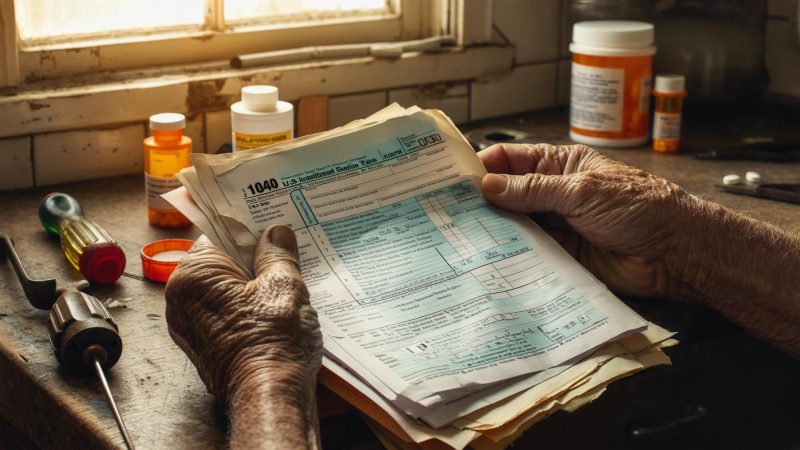
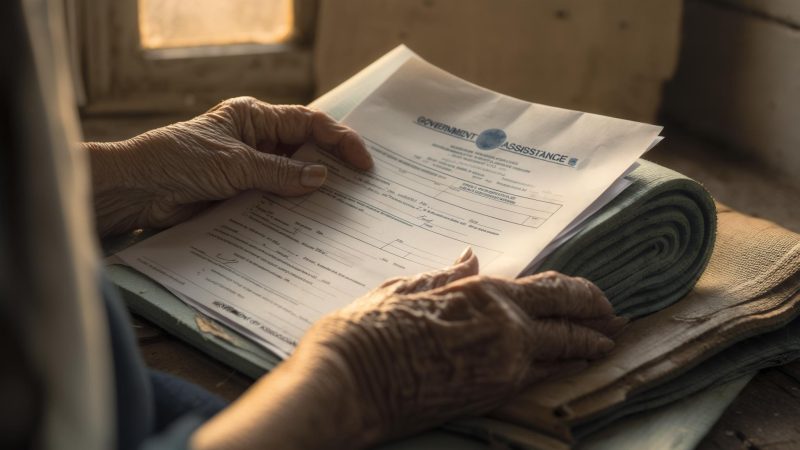
Clint applied through Texas’s online benefits portal in September 2024. He described the process as more organized than he expected — and more emotionally taxing than he was prepared for. He brought a folder of documentation to our interview, color-coded and tabbed, organized the way an engineer organizes a project file. The application, he said, required him to expose his finances in a way that felt deeply uncomfortable.
The Application: Every Document, Every Step
When I asked Clint to walk me through what the application actually required, he didn’t hesitate. He had lived it closely enough to recall every document.
A phone interview with a caseworker was scheduled about ten days after submission. Clint said the call lasted roughly thirty minutes and covered his living situation, his asset levels, and the circumstances around his income loss. Three weeks after applying, he received his determination letter: approved, effective October 2024, with a monthly benefit of $291.
“I sat with that letter for a long time,” he told me quietly. “I wasn’t sure if I felt relieved or embarrassed. Honestly, it was both at the same time.”
Where Clint Stands Today — and What He Would Do Differently
By December 2024, Clint had returned to part-time engineering consulting, earning approximately $4,200 per month. His SNAP eligibility ended when his income crossed back above the threshold. His workers’ compensation appeal was denied a second time in January 2025. That final denial left him responsible for roughly $19,000 in unreimbursed medical expenses — physical therapy, specialist visits, and imaging costs — that he is still working through.
His credit score, as of our April 2026 conversation, sits at 631. Improved from the post-divorce low of 594, but carrying the weight of two hard years. He expects to cross 680 by late 2026, assuming no new disruptions. He said that word — disruptions — carefully, like someone who has learned not to take continuity for granted.
When I asked what he would tell someone in a similar position — an injury, a denial, a sudden income gap — he didn’t offer a tidy answer. He said he would apply for SNAP in the first month, not the fifth. He said he would hire a labor attorney before filing a workers’ comp appeal on his own. And he said he would stop letting the idea of what kind of person needs government assistance get in the way of actually finding out whether he qualified.
The bitterness about the workers’ comp denial has not fully left him. Sitting across from Clint in that Montrose coffee shop, I kept thinking about the gap between the life someone builds and how quickly a single administrative decision can begin to dismantle it. Clint LaRoche is not someone most people picture when they picture a SNAP recipient. He would tell you, with some sharpness, that this is exactly the problem with how we picture these things — and exactly why he agreed to tell this story.
(function(){var w=document.getElementById(‘pvv-scenario-s1775651488114okuu’);if(!w)return;var btns=w.querySelectorAll(‘button[data-choice]’);btns.forEach(function(b){b.addEventListener(‘click’,function(){if(w.dataset.revealed)return;w.dataset.revealed=’1′;btns.forEach(function(x){x.style.opacity=x===b?’1′:’0.45′;x.style.cursor=’default’;x.style.transform=’none’});var o=document.getElementById(‘s1775651488114okuu-out-‘+b.dataset.choice);if(o){o.style.display=’block’}});b.addEventListener(‘mouseenter’,function(){if(!w.dataset.revealed){b.style.borderColor=’#38bdf8′;b.style.transform=’translateX(4px)’}});b.addEventListener(‘mouseleave’,function(){if(!w.dataset.revealed){b.style.borderColor=’#334155′;b.style.transform=’none’}})})})();
.pvv-faq-section details summary::-webkit-details-marker{display:none}.pvv-faq-section details summary::marker{display:none;content:””}.pvv-faq-section details[open] summary .pvv-faq-arrow{transform:rotate(90deg)}


Leave a Reply