

Approximately 43 million Americans carry some form of student loan debt, according to educationdata.org — but a quieter crisis hides inside that number: the cosigners. Older adults with strong credit histories who sign their names onto private student loans and then wait, sometimes for years, for the call they hoped would never come.
I found Aisha LaRoche’s story entirely by accident. Last January, I rode along on a Meals on Wheels delivery route in south Tucson as part of a feature on food access for older residents. The driver, a retired teacher named Glenda Marsh, mentioned the woman who had joined her volunteer shift three weeks earlier — a 64-year-old HVAC technician who had signed up, Glenda said, “because she needed somewhere to put her mind.” That technician was Aisha LaRoche.
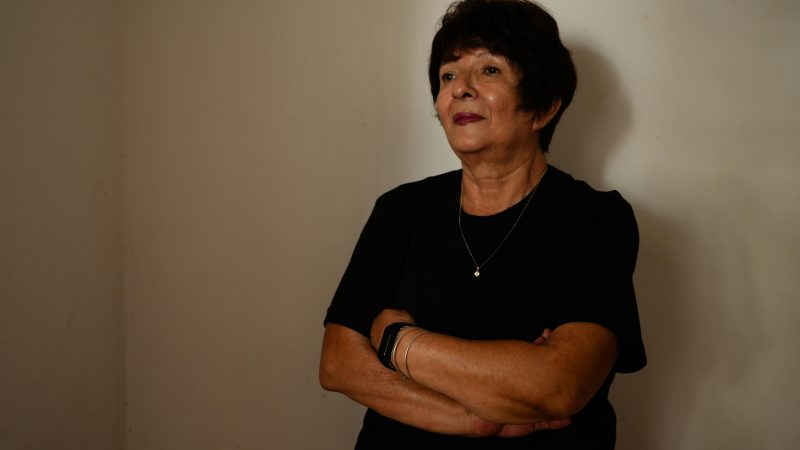
I reached out through Glenda. Aisha agreed to meet me at a diner on Speedway Boulevard on a Tuesday afternoon, still in her Carhartt work pants, her tool bag wedged into the booth beside her. She ordered black coffee, no food, and made clear within the first two minutes that she did not consider herself a victim. “I made a choice,” she said, wrapping both hands around the mug. “I just didn’t understand the full weight of what I was doing.”
A Signature She Thought Was a Formality
Aisha LaRoche has worked as a union HVAC technician in Tucson for 31 years. She earns roughly $68,000 annually — solid wages in a city where the median household income sits closer to $45,000. She is single, lives with a roommate to split costs, and has no dependents. She also has no retirement savings. Not a modest amount — none at all. “I always told myself I’d figure that out later,” she said. “Later kept moving.”
In the fall of 2022, her nephew Darnell, then 21, was accepted into an engineering technology program at a for-profit college in Phoenix. His federal aid covered roughly $12,000 of a $28,000 annual tuition. The school’s financial aid office pointed him toward a private lender for the remaining balance. Darnell’s credit history was thin; he needed a cosigner. He asked Aisha.
Aisha’s credit score at the time was 741. The loan went through in under a week — $47,000 at a fixed rate of 9.4 percent over ten years. She told me she read the first page and the signature line and not much in between. “It felt like helping family,” she said. “It didn’t feel like a financial product.”
What Aisha did not fully grasp was that as cosigner, she carried equal legal responsibility for the entire debt. Unlike federal student loans, which do not require or permit cosigners in the traditional sense, private student loans bind the cosigner as a co-borrower — meaning any default lands squarely on both parties’ credit files and bank accounts simultaneously.
When Darnell Stopped Paying
For nearly two years, Darnell made his payments. He did not finish the degree — he left the program in the spring of 2024 after what Aisha described vaguely as “a personal situation” — but the payments continued through July of that year. Then they stopped.
When I asked Aisha what it felt like to open that first lender letter addressed to her, she paused for a long moment. “Rage,” she said finally. “Not at Darnell. At myself. Because I knew better. I’ve been working since I was 17. I know you don’t sign things you don’t read.”
As Aisha explained, Darnell has since moved to another state and is working. She is not estranged from him — “he’s still my nephew” — but he is not contributing to the loan payments. She has not taken legal action. “That’s not who I am,” she said. “Maybe that’s stupid.”
The 30 Percent That Broke the Math
The timing could not have been worse. Just as Aisha absorbed the $612 monthly loan payment, her landlord sent notice of a lease renewal with a 30 percent rent increase — from $1,050 to $1,365 per month. The combined hit to her monthly budget was $927 in new obligations on a take-home pay of roughly $4,100. She already shared her apartment with a roommate to keep costs manageable.
Aisha told me she considered walking away from the apartment. But with her credit score freshly damaged by the loan default, she worried a new landlord would reject her application. She stayed, signed the new lease, and cut back on everything she could — groceries, a gym membership she had held for nine years, the occasional dinner out. “I’m 64 and I’m eating rice and beans four nights a week,” she said, not with self-pity but with a kind of flat disbelief. “I make decent money. How did I get here.”
What the Shifting Student Loan Landscape Reveals About Private Borrowing
Aisha’s story lands at a moment of significant turbulence in the broader student loan system. As NPR reported in late 2025, federal student loan programs are undergoing sweeping changes in 2026 — including the elimination of the SAVE income-driven repayment plan and the introduction of a lifetime borrowing cap of $257,500 across undergraduate and graduate federal loans combined. These shifts are pushing more students and families toward private lenders to fill the gap.
That dynamic is precisely what ensnared Aisha and Darnell in 2022. Darnell’s federal aid was capped; the private lender stepped in; and the lender required a creditworthy cosigner to approve the loan. The pattern is not unusual. It is, in fact, structurally encouraged by the way private lending fills the space federal programs leave open.
Aisha was unaware, when she signed in 2022, that her lender offered a cosigner release provision — she could have been removed from the loan after 36 consecutive on-time payments by Darnell. He made roughly 22 before stopping. She missed the threshold by 14 months.
“Nobody explained that to me,” she said. “Not the loan officer, not the financial aid office. Nobody sat me down and said, here’s your way out if something goes wrong.”
Where Aisha Stands Now — and What She Has Not Done
When I spoke with Aisha in March 2026, she had been making the $612 monthly loan payment for 16 months — a total of roughly $9,800 paid against a debt she never intended to carry. The remaining balance, with accrued interest, sat at approximately $41,200. She has not contacted an attorney. She has not filed any formal complaint. She has not explored whether the lender’s collection practices comply with federal law.
She has, however, started the Meals on Wheels route. “I needed to do something that wasn’t about money,” she said, standing up to leave when our coffee went cold. “Those people I deliver to — some of them are 80, 85. They figured it out. I’ll figure it out.”
There was nothing triumphant in how she said it. She picked up her tool bag, tucked in her shirt, and walked back out into a 74-degree Tucson afternoon to finish her workday. Thirty years of honest work, one signature, and a gap in the student loan system wide enough for an entire family to fall through.
Related: Her Rent Jumped 30% at Renewal and Her Credit Cards Are Maxed Out — A Louisville Nurse’s Story of Being High-Income and Broke


Leave a Reply