
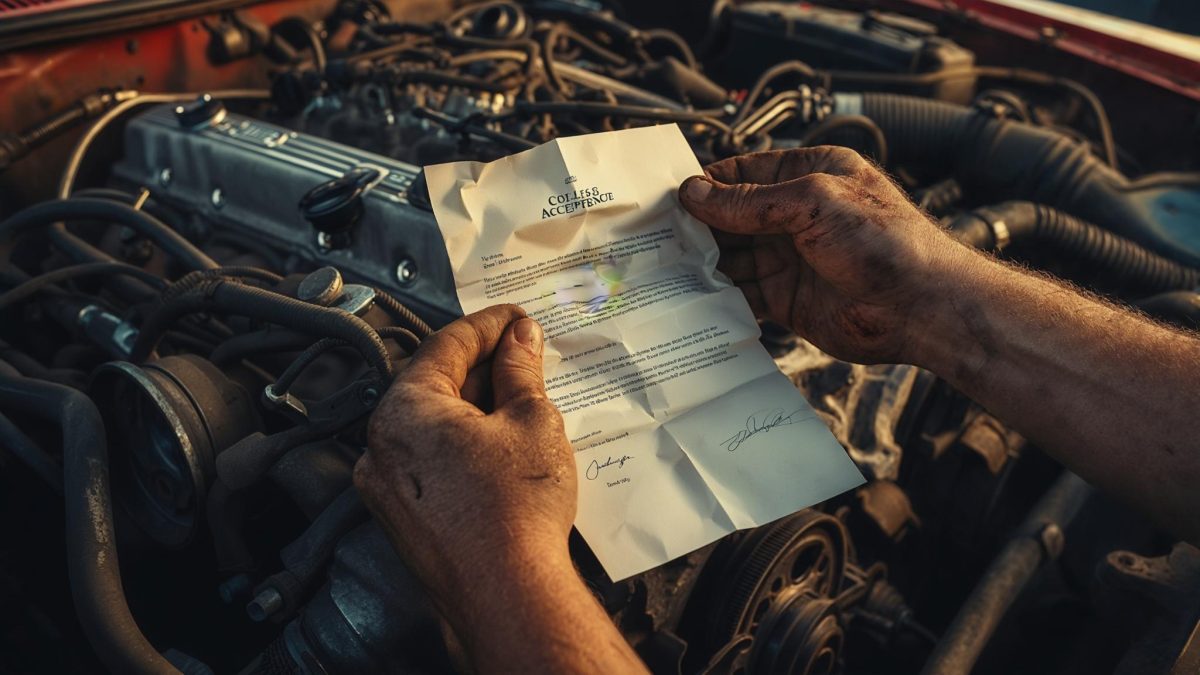
The waiting room of Robert Kowalski’s shop on the west side of Milwaukee smells like motor oil and old coffee. When I arrived on a gray Tuesday in late March 2026, Robert was finishing up a brake job on a 2009 Silverado — the kind of straightforward work that used to keep his calendar full six days a week. He wiped his hands on a shop rag and looked at me like he wasn’t entirely sure why he’d agreed to talk.
“I’m not a charity case,” he said, before I’d even sat down. “I just want to be clear about that.”
I told him I understood. Then I asked him to tell me what the last three years had actually looked like.
A Business Built on Skill — and Then the Cars Changed
Robert Kowalski, 52, has owned Kowalski Auto & Repair since 2008. For most of that time, the shop ran well enough. He employed two part-time technicians, kept overhead low, and built a loyal customer base through word of mouth. At his peak, around 2021, he was pulling in roughly $280,000 in annual revenue.
Then something shifted. Newer vehicles — particularly those manufactured after 2020 — increasingly require proprietary diagnostic software and dealer-specific scan tools to complete even basic repairs. A check-engine light that Robert could have diagnosed in twenty minutes on a 2015 model now sometimes requires a dealership interface he doesn’t have access to, or can’t justify purchasing for a one-bay independent shop.
By early 2026, Robert estimated his annual revenue had dropped to somewhere around $196,000 — a 30% decline from that peak. After payroll, insurance, equipment costs, and rent on the building, he said he was taking home less than he had in his first years of ownership. His wife, Dana, works as a dental office administrator. Her income — roughly $48,000 a year — now covers their groceries, utilities, and most household bills.
“I built something,” Robert told me, leaning back in a chair that had clearly seen better days. “I didn’t build it to watch it get eaten alive by software I can’t afford.”
When His Son’s Acceptance Letter Arrived
In January 2026, Robert’s 18-year-old son, Marcus, was accepted to a university in Minnesota — a school with a strong engineering program that Marcus had wanted to attend since sophomore year of high school. The cost of attendance: approximately $45,000 per year, including tuition, room, board, and fees.
Robert said his first reaction was pride. His second was a kind of quiet dread.
Robert and Dana had no college savings account for Marcus. In the years when the shop was doing well, Robert had reinvested profits back into equipment. He has no IRA, no 401(k), and no pension. As a self-employed business owner, he’d always told himself he’d “figure retirement out later.” Later, he admitted to me, had arrived faster than he planned.
The family filled out the FAFSA — the Free Application for Federal Student Aid — for the first time in February 2026. Robert said the process surfaced numbers he’d never looked at directly before: the shop’s net income, the household’s combined adjusted gross income, the value of business assets. According to Federal Student Aid, the FAFSA uses a Student Aid Index (SAI) to determine financial need, and self-employment income is calculated after business expenses — a distinction that matters for small business owners whose gross revenue can look misleading on paper.
What the FAFSA Actually Returned — and What Robert Didn’t Know
When Marcus’s financial aid offer came back, the family received a federal unsubsidized loan offer of $5,500 for the first year — the standard maximum for a dependent freshman under federal guidelines. There was no federal grant, because the family’s SAI placed them outside the Pell Grant eligibility range. The university offered a modest merit scholarship of $8,000 annually based on Marcus’s academic record.
That left an annual gap of roughly $31,500.
Robert told me he spent two evenings reading through the Federal Student Aid loan options page, something he described as “reading a foreign language.” He learned that Parent PLUS Loans were available to cover remaining costs — but that they carried a fixed interest rate of 9.08% for the 2025–2026 award year, and that repayment would begin almost immediately after disbursement unless he requested deferment.
“I’m 52 years old with no retirement savings,” he said. “Taking on a loan at 9% to pay for college — I kept thinking, who does that help, exactly?”
The Retirement Question Nobody Was Asking
Separate from Marcus’s college situation, I asked Robert about his own financial future. He’s 52, self-employed, and by his own admission has accumulated almost nothing in retirement savings. He owns the building where the shop operates — purchased in 2011 — but carries a commercial mortgage with roughly $90,000 remaining on it.
Robert had never heard of a SEP-IRA — a Simplified Employee Pension plan available to self-employed individuals that allows contributions of up to 25% of net self-employment income, with a 2025 cap of $70,000. According to the IRS, SEP-IRA contributions are tax-deductible, which could reduce his taxable self-employment income in years when the shop performs better.
When I mentioned it, he was quiet for a moment. Then: “Nobody ever told me that existed. My accountant does my taxes. That’s it. We don’t talk about this stuff.”
Where Things Stand — and What Robert Is Still Wrestling With
As of late March 2026, Marcus has accepted his place at the Minnesota university. The family is planning to cover the first year through a combination of the $8,000 merit scholarship, the $5,500 federal student loan in Marcus’s name, roughly $12,000 Dana has saved over several years in a personal savings account, and a Parent PLUS Loan of approximately $19,500 — a decision Robert described as “the one that kept me up at night.”
Robert has not yet opened a SEP-IRA. He said he plans to talk to his accountant about it before the 2025 tax filing deadline, but acknowledged he’d been putting off that conversation. The shop’s revenue situation remains unresolved. He’s been looking into whether joining an independent repair network — some of which negotiate access to OEM diagnostic tools collectively — might help offset the technology gap, but hasn’t committed.
There’s a particular kind of exhaustion in talking to someone who has spent decades being competent — genuinely, demonstrably competent at something — and then watching the ground shift under them in ways that have nothing to do with their skill. Robert knows how to fix cars. He’s good at it. The problem is that the cars changed, and the financial architecture of his life was built on assumptions that no longer hold.
Before I left, I asked him what he’d tell another small business owner in a similar position. He thought about it for a moment, then said: “Don’t wait until you’re 52 to ask questions you should’ve asked at 40. That’s not advice. That’s just what I’d do differently.”
I drove away from the shop thinking about how many people are in some version of Robert’s situation — not poor enough to qualify for most assistance programs, not wealthy enough to absorb a $45,000-a-year tuition bill, and too proud or too busy to have looked closely at what options actually exist. The programs are there. The information is public. But finding it, and understanding it, requires time and patience that most people working six days a week in a one-bay shop simply don’t have.
Related: His Auto Shop Survived 18 Years. Then Computerized Cars Arrived — and Now He Has Nothing Saved at 52




Leave a Reply