

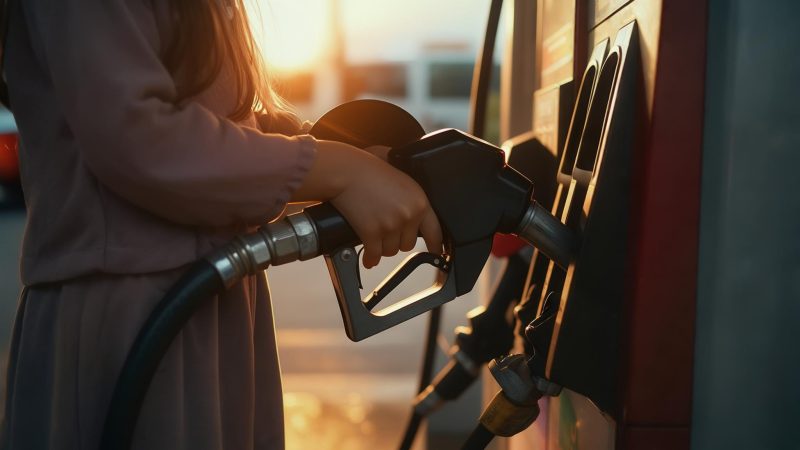
Most people assume that a graduate degree is a ladder out of poverty. Yolanda Parker has a master’s degree in public administration, and right now she is standing behind me in line at a BP station off I-376 in Pittsburgh, talking into her phone about whether she can afford a $340 plumber’s estimate. That was March of this year. I almost didn’t turn around.
I did turn around. And after a few minutes of conversation, she agreed to sit down with me the following Saturday at a diner near her home in the Beechview neighborhood. What she described over the next two hours was not a story of a system that failed her — it was messier than that, and more honest.
Three Financial Fires Burning Simultaneously
When I sat down with Yolanda Parker, the first thing she did was lay three pieces of paper on the table. One was a federal student loan servicer statement showing a balance of $67,240. One was a contractor estimate for emergency roof repairs: $11,800. The third was a collections notice for $8,500 on a personal loan she had cosigned for her younger brother in 2021.
Her brother had stopped making payments in the spring of 2023 without telling her. By the time the collections calls started arriving on her cell, the account was already 90 days delinquent. “I found out the same way a stranger finds out,” she told me. “A letter. No call from him first, just a letter from a collections agency with my name on it.”
Yolanda is remarried. She and her husband Marcus have five children between them — two of hers from a previous marriage, three of his. Marcus works part-time at a warehouse while managing a chronic back injury. Together their household income in 2025 came to roughly $41,000. That puts them firmly in the low-income bracket for a family of seven in Allegheny County, but not low enough to qualify for several of the programs she has tried to access.
The Student Loan Equation That Never Added Up
Yolanda enrolled in a part-time master’s program at Carlow University in 2014, borrowing through the federal Direct Loan program. She graduated in 2018 with a degree she was proud of and a balance that had grown to $54,000 with interest accruing during her studies. By the time pandemic-era payment pauses ended in late 2023, that balance had crept up further.
She had applied for Public Service Loan Forgiveness twice — first in 2019 when she briefly worked for a county agency, and again in 2022 after a short contract position at a nonprofit. Both times, she was denied. The first denial came because her loan type at the time was not eligible under program rules. The second came because her employer, despite being a registered 501(c)(3), did not meet the full-time employment threshold the program requires.
What changed in February of this year — the small win she was still processing when I met her — was her approval for the SAVE plan, the income-driven repayment option introduced by the Biden administration and still being litigated in federal courts as of April 2026. Her monthly payment dropped from $487 to $112. “It felt like someone lifted something off my chest,” she told me. “But then I read the news about the lawsuits, and I thought — what if this disappears?”
That fear is not unfounded. The SAVE plan has faced sustained legal challenges, and according to Federal Student Aid’s official updates, the plan’s long-term status remains tied to ongoing court proceedings. Yolanda’s relief is real, but it exists on uncertain legal ground.
A Roof, a Program, and a Phone Tree That Goes Nowhere
The roof on Yolanda’s Beechview rowhouse started showing damage in the fall of 2024. By December, she had a visible water stain in the upstairs hallway ceiling. The contractor she brought in — recommended by a neighbor — gave her the $11,800 estimate in January. A second opinion came in at $13,200. Neither was a number she could approach.
She had heard about Pennsylvania’s Whole-Home Repairs Program, which was funded with $125 million in state funds in 2022 to help low- and moderate-income homeowners. When I looked into this with her, we found that Allegheny County had indeed received an allocation — but as of early 2026, the waitlist in her county had stretched to over 18 months, according to county housing officials. The program had been popular enough to exhaust its initial funding cycle well ahead of schedule.
“I called seven different numbers,” she told me, describing the weeks she spent trying to find emergency home repair assistance. “Every one of them either had a closed waitlist or told me I should call someone else. One lady gave me a number that was disconnected.” She laughed when she said it, but it wasn’t a happy laugh.
The Cosigned Loan: A Warning Embedded in a Family Story
The story of the $8,500 cosigned loan is, in some ways, the most painful part of what Yolanda shared with me. She cosigned for her brother DeShawn in September 2021, when he was trying to consolidate some smaller debts and start fresh after a divorce. She trusted him. They had always been close.
DeShawn made payments for about 14 months, then stopped. Yolanda doesn’t entirely blame him — he lost a job and, she suspects, was too ashamed to tell her. But the damage to her credit report was significant. Her score dropped from roughly 680 to 591 in the span of three months in mid-2023. That drop has affected her ability to refinance her home, which she had hoped might free up cash for the roof.
In March 2026 — roughly three weeks before I met her at the gas station — Yolanda filed a formal dispute with the collections agency, arguing that she was not properly notified when the account fell delinquent and that proper procedures were not followed. She found a nonprofit credit counseling agency in Pittsburgh that helped her draft the letter at no charge. The dispute was still pending when we spoke.
What a Small Win Feels Like When You’re Still Scared
Yolanda’s SAVE plan approval is real relief. She knows that. The $375 monthly reduction frees up money that was previously disappearing into a payment that never seemed to shrink her principal. “I cried,” she told me simply. “I sat in my car after I got the email and I just cried.”
But she carries the win carefully, the way you carry something you know is fragile. The legal uncertainty around the SAVE plan — and around broader student loan policy following multiple administration changes — means she cannot fully relax into it. She checks the news. She reads the court filings when she can find them translated into plain language. She is not the kind of person who looks away.
What struck me most about Yolanda was not her resilience, a word that gets applied too casually to people who are simply surviving under pressure. It was her precision. She knew every number. She knew the dates of every denial. She had kept every letter. This is what financial precarity does to people — it turns them into their own case managers, whether they signed up for that role or not.
When I left the diner that Saturday, she was getting a ride notification on her phone — back to driving, back to the work that fills the gaps between the programs that haven’t come through yet. The roof was still leaking. The collections dispute was still open. But the student loan payment was $112, not $487, and for now, that was enough to keep going.
Yolanda Parker’s story does not have a tidy ending. That’s not because the system is entirely broken or entirely fine — it’s because the gaps in public assistance programs tend to fall hardest on people who are too resourceful to qualify for the lowest-income tiers, and too financially stretched to bridge the difference themselves. She is not an outlier. She is, in my reporting experience, remarkably common.
Related: She Left USPS at 30 With $52,000 in Student Loans and a $1,847-a-Month COBRA Bill — and She’s Numb to All of It
Related: He Got a Raise and Still Couldn’t Fix His Roof — What a Boise Manager Learned About Energy Tax Credits

Leave a Reply