
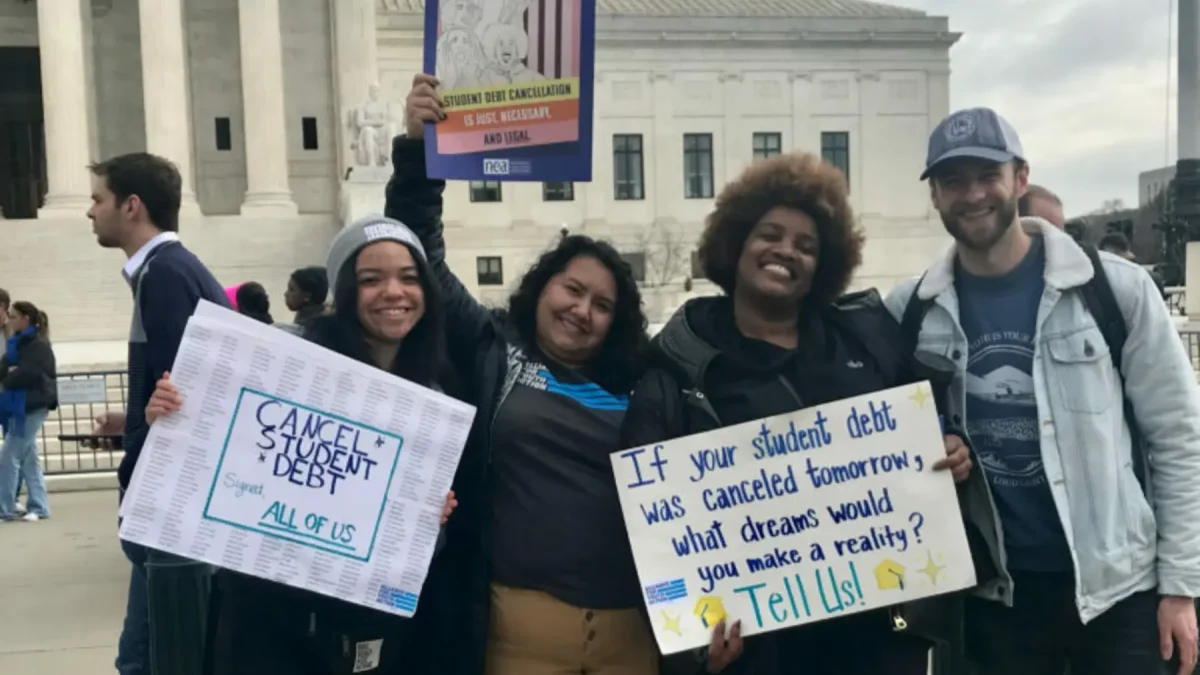
A federal deadline is quietly closing on one of the most significant student loan relief windows in U, according to benefitreporter.org.S. history, and millions of borrowers who did almost nothing during the pandemic years may already be on the right side of it. The one-time income-driven repayment (IDR) account adjustment, which counts previously ineligible payment months toward forgiveness, is reshaping who qualifies and when. If you spent 2020 through 2022 avoiding your loan servicer’s inbox, you may have accidentally helped yourself.
This is not a scam. It is not a phishing attempt. And it is not the kind of story that ends with a catch buried in fine print. For a specific group of federal student loan borrowers, ignoring the noise turned out to be financially sound; not because avoidance is a strategy, but because the policy landscape shifted underneath them in ways nobody predicted.
How the Pandemic Forbearance Quietly Built Forgiveness Credit
From March 2020 through late 2023, federal student loan payments were paused under a series of emergency forbearance orders. Most borrowers treated that pause the way you treat a smoke alarm with a dead battery, they acknowledged it existed and moved on. What almost nobody understood at the time was that those frozen months would later count as qualifying payments toward IDR forgiveness under the one-time adjustment.
Pandemic forbearance months now count toward IDR forgiveness. That single policy decision transformed the math for millions of borrowers. Someone who had been repaying for 15 years and assumed they had five more to go may have crossed the 20-year threshold without making a single additional payment. Balances that qualified; often in the $15,000 to $25,000 range after years of payments, were wiped under this framework.
The avoided interest during the freeze compounded the benefit. Add zero-interest forbearance to newly credited payment months, and the total financial benefit for a median borrower with roughly $65,000 in federal student loan debt approaches $18,000; a figure that borrowers in online communities have cited repeatedly as their approximate windfall from this period.
| Borrower Scenario | Years Before Adjustment | Years After Adjustment | Estimated Forgiveness |
|---|---|---|---|
| 17 years on IBR, $22,000 remaining | 3 years remaining | Threshold met | ~$22,000 |
| 12 years on ICR, $18,500 remaining | 8 years remaining | 3–4 years remaining | Partial credit applied |
| SAVE plan, original balance ≤$12,000 | 10-year track | 10-year track (unchanged) | Full balance at 10 years |
| Never enrolled in IDR, standard repayment | N/A | Months may still count | Depends on total months |
Student Loans: 9 Million Borrowers Mistakenly ‘Approved’ for Forgiveness: What Happens Now?
Approximately 9 million borrowers received emails in 2024 informing them they had been approved for student loan forgiveness, emails that turned out to contain an error. According to reporting from ABC7 and Fox4 News, an Accenture spokesperson confirmed that an email was “sent to a number of student loan debt relief applicants with an inaccurate subject line.” Those 9 million borrowers subsequently received corrective emails from the government clarifying the mistake.
The fallout was significant. Borrowers who had spent years anxiously monitoring their accounts suddenly believed their debt was gone, only to learn the notification was premature. Financial planners and servicer customer support lines were flooded. The episode exposed a fragile infrastructure trying to process an unprecedented volume of forgiveness decisions simultaneously.
What the error did not change: many of those 9 million borrowers are legitimately close to or at the forgiveness threshold. The mistake was in the communication, not necessarily in the underlying eligibility calculation. Borrowers in that group should log into StudentAid.gov and review their payment count directly rather than waiting for another email.
“An email was sent to a number of student loan debt relief applicants with an inaccurate subject line.”; Accenture spokesperson, via Fox4 News
The Consumer Financial Protection Bureau has a dedicated page to help borrowers navigate federal student loan forgiveness options and the one-time IDR adjustment. Checking that resource, rather than relying on inbox notifications; is the more reliable approach right now.
Why Ignoring the Emails Actually Worked for Some Borrowers
This requires a careful distinction. Ignoring emails from your loan servicer is not a recommended strategy. Ignoring scam emails, however, is exactly what the FTC, the DFPI, and StudentAid.gov all advise.
The Federal Trade Commission has sent more than $356,900 in refunds to consumers harmed by scammers who used student loan forgiveness as bait. The DFPI explicitly warns borrowers to be cautious of unsolicited calls, emails, or letters claiming forgiveness eligibility.
The borrowers who accidentally benefited were not ignoring legitimate servicer communications out of savvy, they were overwhelmed, ashamed, or simply exhausted by the volume of pandemic-era correspondence. What they didn’t do was pay a third-party debt relief company to “apply” for forgiveness on their behalf. That restraint saved them hundreds or thousands of dollars in fees, and the underlying policy did the rest.
- Pandemic forbearance months (March 2020 – late 2023) now count toward IDR forgiveness thresholds
- Borrowers who were already 15+ years into repayment crossed the 20-year mark during the freeze
- Zero interest during forbearance prevented balances from growing, making forgiveness amounts larger
- Borrowers who redirected payments toward high-interest debt during the freeze saved an estimated $3,800 in credit card interest over two years
- Missing two years of IDR recertification does not automatically disqualify borrowers under the one-time adjustment rules
What This Means If You’re Still Carrying Federal Student Debt in 2026
Three actions matter right now. First, verify your payment count on StudentAid.gov. Under the one-time IDR adjustment, the Department of Education is supposed to automatically update payment counts, but errors exist, and borrowers who consolidated from FFEL or Perkins loans may not have been captured correctly.
Second, understand which plan you’re on. The SAVE plan (Saving on a Valuable Education), which replaced REPAYE, offers forgiveness in as few as 10 years for borrowers whose original loan balance was $12,000 or less. For someone who delayed two or three years in enrolling in an IDR plan, the lifetime cost of that delay can surpass $15,000 in extra payments. Enrolling now still matters even if you missed earlier windows.
Third, be skeptical of anything that arrives unsolicited. StudentAid.gov specifically flags that questionable messages promising forgiveness often contain unusual capitalization and urgent language. The FTC’s consumer alert page maintains an updated list of active student loan scam patterns. Legitimate forgiveness does not require you to pay a fee or hand over your FSA ID password.
- Log in to StudentAid.gov and check your IDR payment count and forgiveness tracker
- Confirm your loan type ; only Direct Loans qualify automatically; FFEL loans require consolidation
- Enroll in IDR if you haven’t, use the IDR application on StudentAid, according to studentaid.gov.gov, not a third-party site
- Ignore unsolicited forgiveness offers ; real forgiveness comes through your servicer, not a cold call
- Check the CFPB’s guidance on navigating forgiveness options if your servicer gives conflicting information
For borrowers who spent the pandemic years in financial survival mode, paying down credit cards, covering rent, not opening the loan emails; the policy outcome is genuinely counterintuitive. Avoidance, in this narrow window, was not punished. Whether that continues under the current administration’s approach to student loan policy is a different question, and one that makes acting now more important than waiting to see what changes next.
The $20,000 figure is real for a specific cohort: borrowers with remaining balances in the $15,000–$25,000 range who hit their forgiveness threshold during or after the pandemic forbearance period. It is not a universal outcome. But it is a documented one, and the window to capture remaining credits from the one-time IDR adjustment is not permanently open.
More Stories Like This
- I stopped opening my student loan bills for two years out of shame — then a $20,000 forgiveness notice arrived and changed everything
- I Applied for PSLF and $87,000 of My Debt Had Already Vanished Before I Even Asked
- <a href="https://benefitreporter, according to benefitreporter.org.org/missed-save-plan-deadline-accidentally-saved-18000/” style=”color:#0284c7;text-decoration:none;font-weight:500″>Student loan borrowers who rushed to enroll in SAVE before the deadline may be overpaying — one person who missed it accidentally saved $18,000


Leave a Reply