

The comment appeared on a piece I’d written about housing instability and low-income renters in the Southwest. It was brief — maybe four sentences — but something about the precision of the details stopped me cold. The commenter described a 30% rent increase, a child who couldn’t be left alone, and a credit score that had been quietly poisoning every application he submitted. I reached out that same afternoon. Three weeks later, I was sitting across from James Thornton at a small café near Old Town Albuquerque, watching him stir a cup of green tea he never actually drank.
James is 54 years old, soft-spoken, and works as a part-time yoga instructor — teaching roughly 14 hours of classes per week at two different studios in the city. His wife, Renata, stays home full-time to care for their 17-year-old son, Marcus, who has a developmental disability requiring round-the-clock supervision. Between James’s teaching income and a small monthly stipend Renata receives through a state caregiver support program, the household brings in approximately $2,100 per month.
That number, James told me, used to be enough. Then January 2025 arrived.
When the Lease Renewal Letter Arrived
James and Renata had been renting the same three-bedroom house in the South Valley neighborhood of Albuquerque since 2021. The rent had been $1,150 per month — manageable, just barely, given their income. When the renewal letter came in November 2024, the new figure was $1,495. That is a 30% increase, applied in a single lease cycle.
The math was immediately brutal. At $1,495 in rent alone, the Thorntons would be spending roughly 71% of their gross monthly income on housing — well above the federal threshold of 30% that defines a household as “cost-burdened,” according to HUD’s affordability guidelines. Utilities, groceries, Marcus’s medications, and James’s fuel costs for commuting between studios would consume whatever remained.
The house itself compounded the problem. James described a slow accumulation of maintenance failures the landlord had repeatedly deferred: a leaking roof that had gone unaddressed since a monsoon in August 2023, a water heater that was replaced only after James threatened to file a habitability complaint, and an evaporative cooler that broke down in June 2024 and still hadn’t been properly repaired. Yet the same landlord who wouldn’t fix the cooler was now charging $345 more per month for the privilege of staying.
James’s credit score, which he disclosed was sitting at approximately 578 at the start of 2025, reflects a chapter of his life he doesn’t revisit lightly. Between 2016 and 2019, he said, the family went through a period of significant financial strain following a medical crisis involving Marcus. Medical debt went to collections. Two credit cards went delinquent. A personal loan was charged off. The damage was done slowly, and it had proven extremely difficult to reverse.
Discovering the Housing Choice Voucher Program
James had heard of Section 8 — the informal name for the federal Housing Choice Voucher (HCV) program — but had always assumed it was for people in more dire circumstances than his own. It was a neighbor, an older woman named Gloria who had received a voucher years earlier, who finally pushed him to look into it seriously in late December 2024.
The Housing Choice Voucher program, administered federally by HUD and locally through public housing authorities, subsidizes rent for eligible low-income households. Participants typically pay 30% of their adjusted monthly income toward rent, with the voucher covering the remainder up to a locally established payment standard. For a family of three in Bernalillo County, where Albuquerque is located, the payment standard for a three-bedroom unit was approximately $1,420 per month as of early 2025, per figures published by the Albuquerque Housing Authority.
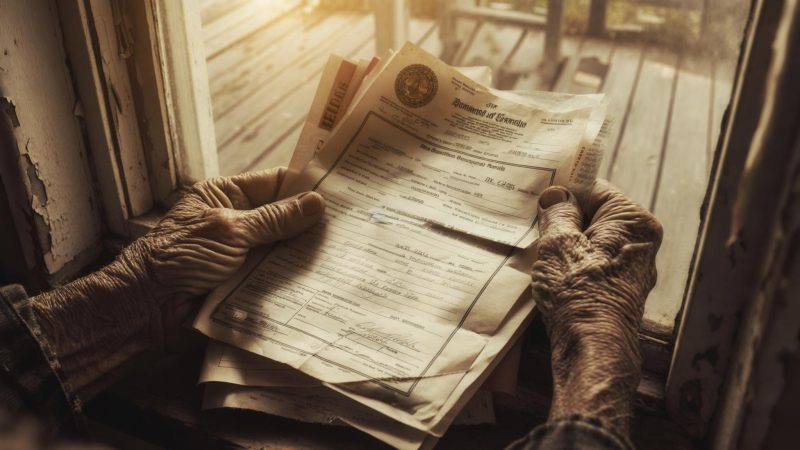
James submitted his application to the Albuquerque Housing Authority in early January 2025. He told me the process required gathering documentation he hadn’t thought about in years: three months of pay stubs from both studios, Renata’s caregiver stipend verification letters, Marcus’s disability documentation, bank statements, and a written explanation of the derogatory items on his credit report.
“I spent probably 12 hours on that application over four days,” he said. “My wife was helping me find old paperwork at midnight. We had to get a letter from Marcus’s doctor just to confirm what we’ve been living with for 17 years.”
The Waiting List Reality
James’s application was accepted into the Albuquerque Housing Authority’s system — but acceptance into the system is not the same as receiving a voucher. Like most housing authorities across the country, Albuquerque operates a waiting list, and demand routinely and significantly outstrips supply.
When I spoke with James in March 2026, he was still on the waiting list — more than 14 months after his initial application. He had received one status update letter, in September 2025, confirming his position had advanced but providing no timeline for when he might expect a voucher. The letter did note that his household received a priority designation due to Marcus’s documented disability, which James said gave him cautious hope.
In the meantime, the family had been forced to sign the new lease in February 2025. The $1,495 rent has been a constant pressure ever since. James picked up two additional private yoga sessions per week — roughly $80 per session — to help cover the gap, but teaching 18 to 20 hours per week at age 54, with the physical demands the work entails, is not a sustainable long-term solution, as he acknowledged himself.
An Unexpected Bridge: New Mexico’s Rental Assistance Programs
The long wait for a voucher might have been financially catastrophic if not for a separate program James discovered through a social worker connected to Marcus’s care team in April 2025. The New Mexico Mortgage Finance Authority administers several rental and housing stability programs, and James was directed to apply for emergency rental assistance funds that had been allocated through the state’s housing division.
James was approved in June 2025 for $4,200 in state rental assistance — enough to cover roughly four months of the additional rent burden he had taken on since the increase. The funds were paid directly to the landlord. It was not a permanent solution, James was quick to clarify, and the assistance program had a one-time-per-household limitation that meant he could not apply again.
“That $4,200 felt like the first real breath I’d taken in six months,” he told me. “But it runs out. And then you’re back to the math that doesn’t work.”
What James Knows Now — and What Still Weighs on Him
When I asked James what he wished he had known before his lease renewal letter arrived, he didn’t hesitate. He said he would have started the HCV application process years earlier, before the crisis point, at a time when he wasn’t scrambling under financial and emotional pressure. Many housing authorities allow applicants to join waiting lists before an acute housing crisis occurs, and James believes he lost valuable queue position by waiting until he had no other options.
- He also said he would have been more proactive about documenting Marcus’s disability status for housing priority purposes — paperwork that took weeks to gather under pressure but could have been prepared in advance.
- He wishes he had known that credit score, while it affects private market rental applications, does not automatically disqualify an applicant from the HCV program. Public housing authority eligibility is primarily income-based, not credit-based.
- He said he would have asked Marcus’s care team about housing resources much sooner — the social worker connection that led him to the MFA assistance program was available to him all along; he simply hadn’t thought to ask.
There are no clean endings to James’s story — at least not yet. As of my last conversation with him in late March 2026, he is still on the waiting list. He is still teaching yoga six days a week. Renata is still home with Marcus. The roof, James mentioned almost as an aside near the end of our conversation, had started leaking again after the winter rains. The landlord had not yet responded to his repair request.
What strikes me most about James Thornton is not the adversity itself — housing instability, caregiver strain, and damaged credit are devastatingly common circumstances across the country — but the particular kind of resilience he carries. He is not angry, or if he is, he keeps it very quiet. He is focused, methodical, and relentlessly oriented toward Marcus’s stability above his own comfort. When I asked whether he ever considered just leaving Albuquerque for somewhere cheaper, he looked at me with a patience that I found slightly humbling.
The Housing Choice Voucher program, for all of its structural limitations and punishing wait times, remains one of the primary federal tools available to households in James’s position, as documented by HUD research on voucher effectiveness. Whether James receives that voucher in six months or three years, the fact that the path exists — and that he found it — matters. His story is not a success story. Not yet. But it is not a story of giving up, either.
I left that café thinking about all the people who never leave a comment, never get a follow-up call, and navigate these systems entirely alone. James was lucky in a limited sense — he was found. Most aren’t.
Related: After His Wife Retired, Oscar Kirby’s Drug Costs Jumped $340 a Month — Here’s What Happened



Leave a Reply