
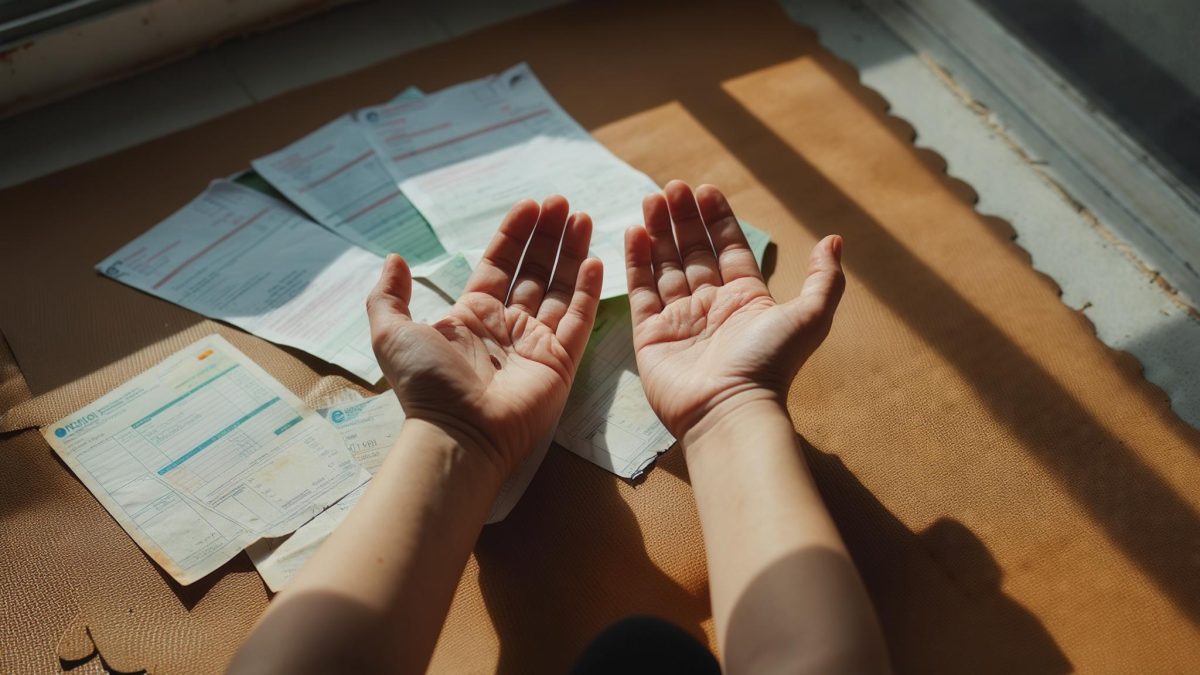
The conventional assumption about public assistance programs is that they’re for people who are already in crisis. Grace Nakamura’s story dismantles that idea quietly and completely — because she isn’t in crisis. Not yet.
When I met Grace at a coffee shop in Portland’s Alberta Arts District on a Tuesday morning in March 2026, she arrived in linen pants and a tote bag full of class schedules. She ordered oat milk in her latte and took a long pause before she answered my first question. She is 38 years old, a former corporate HR director, a part-time yoga instructor, a wellness blogger with a modest following, and the mother of a seven-year-old daughter named Suki. She is also, by her own admission, one bad day away from financial collapse.
The Gap Between the Life She Chose and the Life She Could Afford Alone
Grace’s partner, Daniel, is a software architect earning roughly $140,000 a year. That income covers their mortgage, their daughter’s school, groceries, the occasional family trip. Grace contributes approximately $18,000 annually — some from in-person yoga classes, some from sponsored content on her wellness blog. It is not nothing. But it is also not survivable on its own.
What Grace told me stopped me mid-note: they have no life insurance policy on Daniel, no short-term or long-term disability coverage, and no will. Their daughter would have no named guardian in a legal document. Their mortgage would enter default within three months of Daniel losing his income or his life.
“I know how it sounds,” Grace told me, wrapping both hands around her cup. “I worked in HR for nine years. I knew every benefits package we offered employees. And somehow I walked away from all of it and never replaced a single piece of it.”
She laughed when she said it. But the laugh did not reach her eyes.
What Oregon’s Medicaid Program Would Actually Look Like for Her Family
Before I met with Grace, I spent time reviewing Oregon’s public assistance landscape. Oregon’s Medicaid program — the Oregon Health Plan — currently covers adults and families with household incomes at or below 138 percent of the Federal Poverty Level. For a family of three in 2026, that threshold sits at approximately $37,800 annually.
If Daniel’s income disappeared tomorrow, Grace’s $18,000 annual earnings would place her family well inside eligibility. That is not a small thing. It means healthcare coverage for Suki and for Grace herself — coverage she currently has zero plan for outside Daniel’s employer-sponsored insurance.
When I walked Grace through these numbers, she was quiet for a long moment. She had never actually looked up what she would qualify for. She had assumed, in the vague way comfortable people often assume, that public benefits were not her world.
The SNAP Question She Had Never Thought to Ask
Healthcare is only one piece. I asked Grace whether she had ever considered what her family would eat on $18,000 a year with a child and a mortgage. The SNAP gross income limit for a household of three in fiscal year 2026 sits at 130 percent of the poverty level — approximately $2,552 per month, or about $30,624 annually, according to USDA Food and Nutrition Service eligibility guidelines.
Grace’s income alone falls below that threshold. She would likely qualify for SNAP benefits, at least in the short term following a loss of income. The maximum monthly SNAP allotment for a family of three in 2026 is approximately $766 — not enough to replace a lifestyle, but enough to feed a child while navigating the rest of the collapse.
“I’ve never once thought about SNAP,” Grace admitted. “And I feel like I should be embarrassed about that, but honestly I think I just — I relied on Daniel and told myself I was being free-spirited about money. That’s a luxury I made up.”
The Philosophical Disagreement That Made the Practical Problem Worse
Grace and Daniel disagree about money in the way that couples sometimes do when one partner grew up with less and the other grew up adjacent to it. Daniel, Grace told me, wants a will, wants life insurance, wants a financial planner. Grace has resisted all of it — not out of ignorance, but out of a genuine belief that planning for death is a kind of spiritual surrender.
“He’s brought it up probably six times in the last three years,” she said. “And every time I sort of redirect the conversation. I tell myself we’ll do it when things settle down. But things don’t settle down. That’s just what I say.”
What Grace described to me is not a unique story. It is, in fact, a remarkably common one. The U.S. Department of Labor has documented for years that self-employed and gig workers are among the least likely to carry private disability insurance, even when they are primary or co-primary earners in a household. Grace’s situation — meaningful income, zero coverage — is not unusual in the wellness and creator economy.
What She Decided to Do, and What She Still Hasn’t Done
I spoke with Grace again by phone two weeks after our in-person meeting. She told me that she and Daniel had finally sat down together and pulled up the Oregon Health Plan website. She had bookmarked the Healthcare.gov enrollment page. She had, for the first time, looked up what the Marketplace would cost her if she left Daniel’s plan — a number that landed around $680 per month for herself and Suki at her income level, without subsidies.
“That number made the whole thing real,” she said. “I’ve been uninsured in my own mind for years and just didn’t know it.”
They have not yet drafted a will. They have not yet contacted a life insurance broker. Grace told me they have a phone call scheduled with an estate attorney — a phone call that has already been rescheduled twice. The progress is real, but it is also slow, interrupted by the same philosophical friction that created the gap in the first place.
What Grace has done is something smaller and more immediate: she printed out Oregon Health Plan eligibility requirements. She put them in a folder. She told me she wanted Suki to know, someday, that her mother had at least faced the thing she had been avoiding.
I left that second conversation with the feeling that Grace is not going to fix everything this year. She may not fix it in the next two years. But she has crossed the threshold from willful unawareness into something messier and more honest — a kind of anxious accounting for what she actually has, what she actually earns, and what a government safety net looks like when the life you built requires one you never planned for.
That threshold, I’ve found in this work, is where most of these stories actually begin.
Related: She Left Her Corporate Job for Yoga Classes. Now Her Family Has No Safety Net and She Can’t Stop Thinking About It




Leave a Reply