
The deadline that matters most to Denise Espinoza right now is not a payment due date. It is a birthday. She turns 56 in September 2026, and she has done the math more times than she can count: if nothing changes with her repayment plan, she will still owe money on her graduate school loans when she is 63. For a woman who has spent 28 years pulling wire through industrial buildings across southeastern Wisconsin, that number lands like a punch.
I first connected with Denise in February 2026, when a social worker at the Milwaukee County Department of Health and Human Services suggested I reach out to her. The social worker, who works with clients navigating public benefit programs and debt relief options, told me Denise was not a typical case — she earned too much to qualify for most aid programs, but not enough to comfortably absorb her loan payments alongside everything else. “She’s caught in a gap that more people are falling into than anyone wants to admit,” the social worker told me.
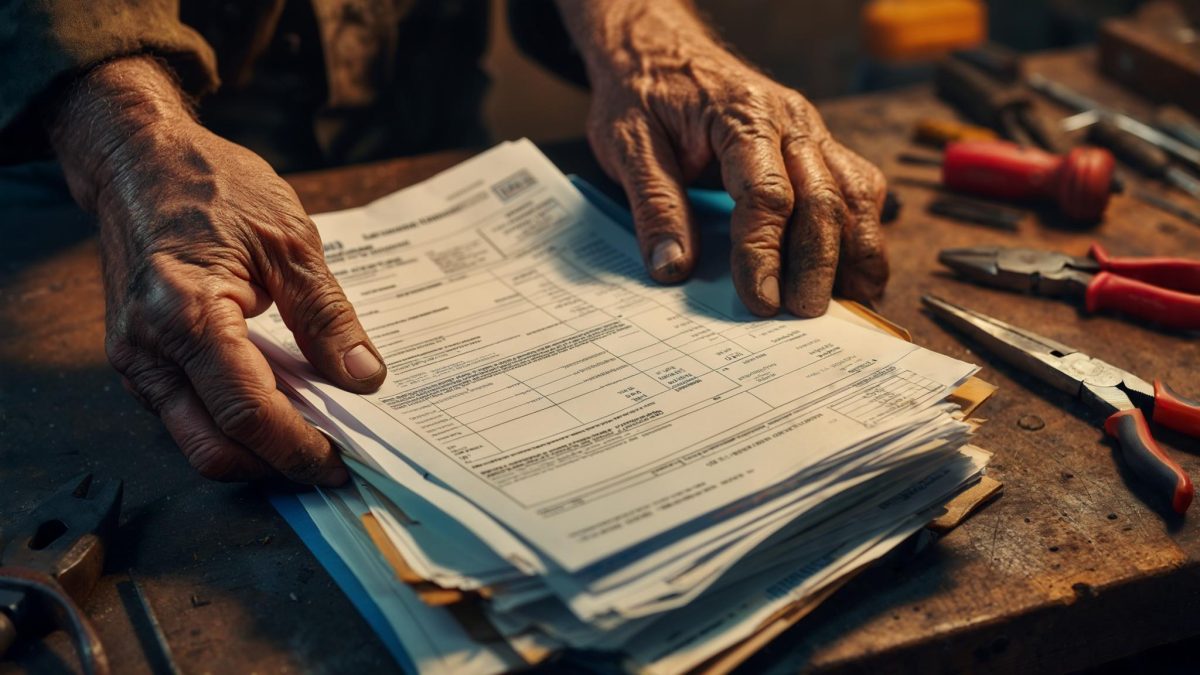
When I sat down with Denise at a diner on West Wisconsin Avenue on a gray Tuesday morning, she arrived with a folder. Not a thick one — just a manila folder holding a few loan statements and a printout from the Federal Student Aid website. She set it on the table and ordered black coffee. “I’ve been carrying this folder to appointments for two years,” she said, “and I still don’t feel like I understand what I’m paying for.”
A Graduate Degree That Made Sense on Paper
Denise Espinoza has been a licensed electrician since 1998. She joined the International Brotherhood of Electrical Workers Local 494 in Milwaukee not long after and spent the next decade and a half moving up through commercial and industrial work. By 2014, she was making solid money and thinking about a path into project management or contracting.
That thinking led her to enroll in a part-time Master of Science in Construction Management program at a private university in the Chicago area in 2015. She finished in 2018. The degree cost her $58,400 in tuition and fees, financed almost entirely through federal graduate PLUS loans. At the time, she was earning roughly $71,000 a year and believed the credential would open doors to higher-paying supervisory and consulting roles.
“The degree did help,” Denise told me. “I got a promotion in 2021. My pay went up to around $88,000. But the loans didn’t go away, and then the SAVE plan happened and then it un-happened, and I’ve been stuck in limbo ever since.”
She is referring to the Saving on a Valuable Education (SAVE) plan, the Biden administration’s income-driven repayment program that was blocked by federal courts in mid-2024 and remained in legal suspension as of April 2026. According to Federal Student Aid’s SAVE plan page, borrowers enrolled in SAVE have been placed in an administrative forbearance while litigation continues — meaning interest is not accruing, but the months are not counting toward forgiveness in most cases.
The Raise That Made Things Worse
In early 2024, Denise’s union secured a new contract. Her hourly rate increased, and with overtime, her gross income for the year came to approximately $94,000. On paper, that looks like success. In practice, it triggered a recalculation of her income-driven repayment amount.
Before the raise, Denise had been paying approximately $530 per month on an income-driven plan. After recertification in late 2024, her required payment jumped to $718. She was also carrying a car payment of $389 per month, had moved into a nicer apartment in 2022 after a difficult period living with a difficult roommate — a decision she described as “the one thing I did for myself” — and had accumulated roughly $6,200 in credit card debt during a period of home repairs.
“People hear what I make and they think I must be fine,” she told me, pushing her coffee cup to the side. “But I also have $1,600 a month in rent, a car note, the loan, and I’m trying to put something into retirement before it’s too late. There’s not a lot of room in there.”
Navigating a Repayment System in Flux
Denise’s situation is complicated by the fact that the repayment landscape itself has been unstable. The SAVE plan, which would have calculated her payments at 5 percent of discretionary income for undergraduate loans and 10 percent for graduate loans, offered lower payments than older income-driven plans. When courts blocked it, borrowers like Denise were shifted into forbearance — which sounds like relief but comes with its own costs.
Denise does not qualify for PSLF — her employer is a private electrical contracting firm, not a government or nonprofit entity. Her forgiveness timeline, if she stays on an IDR plan, would be 25 years from when she first entered repayment in 2018. That means 2043, when she would be 72 years old. Any forgiven amount at that point would, under current tax law, potentially be treated as taxable income.
When I asked her if she had spoken with a student loan counselor or a HUD-approved housing counselor who sometimes assists with broader debt questions, she said she had tried twice. “The first person I talked to basically read me the same information that’s on the website,” she said. “The second one was helpful but she said there’s not much she can do until the courts settle what plan I’m even supposed to be on.”
The Exhaustion Behind the Spreadsheet
What struck me most about Denise was not the numbers, which are difficult but not catastrophic. It was the weariness. She described herself as a planner — someone who has always kept a budget, tracked expenses, made decisions carefully. But somewhere between the raise, the apartment, the SAVE plan chaos, and two years of conflicting information from her loan servicer, she had started making fewer decisions rather than better ones.
“I have a spreadsheet,” she told me at one point, with a short laugh. “I’ve had it for three years. I just stopped opening it. Because every time I open it, I add up the numbers and they’re the same, and then I close it.”
The lifestyle inflation she acknowledges openly. The apartment upgrade. A vacation to Puerto Rico in 2023 that she put partly on a credit card. A new truck in 2022 that she could afford on paper but that added $389 a month to her obligations. “I got the raise and I felt like I finally could breathe,” she said. “And I made choices as if that breathing room was going to last forever.”
She is not unique in this. According to Federal Reserve consumer research, workers in the 45-to-64 age range who carry student loan debt report significantly higher rates of financial anxiety than younger borrowers with similar balances, partly because retirement is closer and the math of compound interest has had more time to accumulate.
Where Things Stand Now
As of our last conversation in late March 2026, Denise had not made any major changes to her repayment strategy. She is still in SAVE-related forbearance, still making no payments, and still uncertain whether the months of pause will ever count toward forgiveness. She had an appointment scheduled in April with a nonprofit credit counselor through the Wisconsin chapter of GreenPath Financial Wellness — a step she described as “finally doing the thing I’ve been telling myself to do for a year.”
She had also started opening the spreadsheet again. Not every week, but most weeks.
The outcome of Denise’s story is still being written. Her balance is higher than it was when she graduated. Her payments, when they resume, will be larger than before her raise. The forgiveness she theoretically qualifies for is 17 years away — if the program survives — and comes with a potential tax bill. She is not in crisis, but she is not comfortable, and she is tired in a way that the folder on the diner table communicated more clearly than any number could.
“I don’t regret the degree,” she said, standing up to leave, tucking the folder under her arm. “I just wish someone had sat me down and explained how this all actually worked. Not the brochure version. The real version.” She pulled on her coat and looked at the gray sky through the diner window. “I’m still figuring out the real version.”
Related: She Got a Raise, Then Got Hurt at Work — Her Workers’ Comp Was Denied and She’s Still Paying for It
Related: He Earned $80,000 a Year as a Union Electrician — Then COBRA and a Debt Garnishment Nearly Erased His Retirement



Leave a Reply