
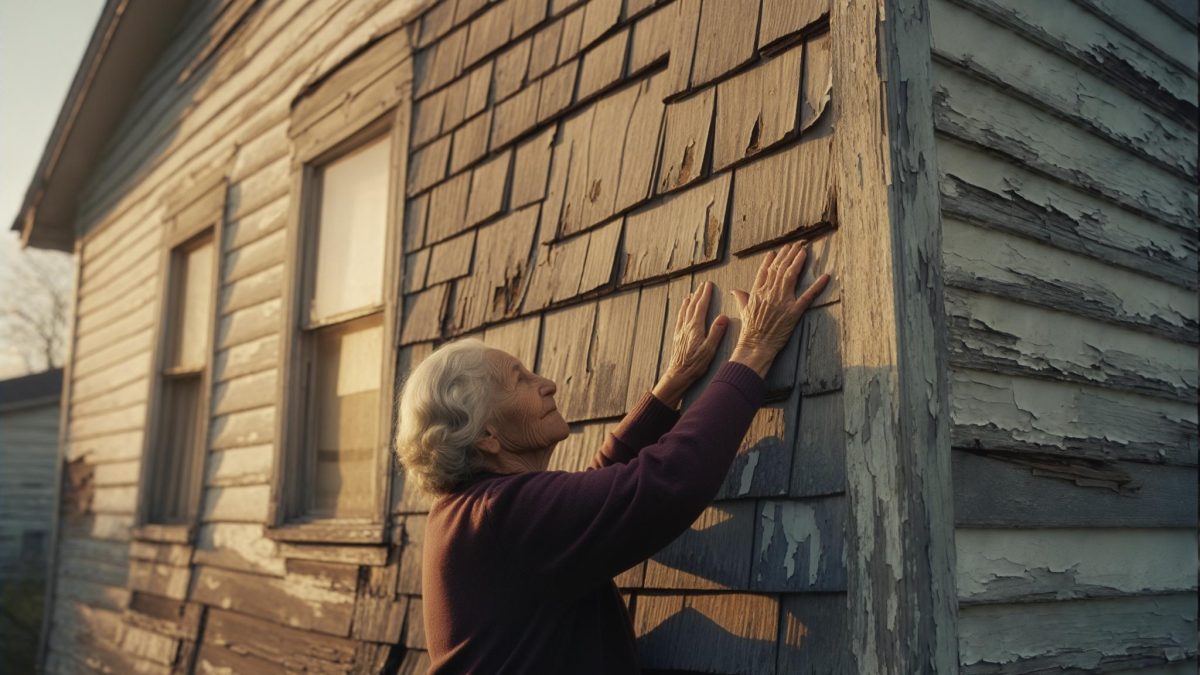
The application deadline for Pennsylvania’s Property Tax/Rent Rebate program closes every June 30, and in early March 2026, Patricia Novak was still deciding whether to apply. That window — and the anxiety around it — is what brought me to her home in Pittsburgh’s Beechview neighborhood on a grey Tuesday afternoon.
When I sat down with Patricia Novak, 65, in her living room, the first thing I noticed was the plastic bin of coupons on the kitchen table, organized by category with rubber bands. She saw me looking. “Old habit,” she said, without apology. “I drive out to the Giant Eagle in Carnegie because it’s cheaper than the one down the street. Twenty minutes each way, but it adds up.”
A Pension That Looked Like Enough — Until It Wasn’t
Patricia retired from the United States Postal Service in 2021 after 32 years of service. Her federal pension, combined with her own Social Security benefit, brought in roughly $2,340 per month. That figure felt stable when she and her husband, Gerald, were both alive. Gerald’s Social Security check added another $1,150 monthly to their household.
Gerald died in January 2023. Under Social Security survivor benefit rules, Patricia was eligible to receive the higher of the two benefits — but not both. Her own benefit was larger, so Gerald’s income simply disappeared from the household. Overnight, the couple’s combined monthly income dropped by nearly a third.
“I knew we weren’t rich,” Patricia told me. “But I thought we were fine. I thought I had done everything right. Thirty-two years of showing up, and then you’re sitting at the kitchen table trying to figure out if you can fix the furnace.”
The furnace in question is original to the house, which was built in 1967. A contractor quoted her $4,800 for a replacement last fall. The roof, which has been leaking near the chimney since 2024, would cost between $9,000 and $12,000 to replace. Patricia has approximately $18,000 in savings, but she is holding that money deliberately — for medical costs she expects as she ages.
What She Didn’t Know She Qualified For
Patricia had not applied for any government assistance program since retiring. She described a quiet but firm resistance to the idea. “My kids keep saying, ‘Mom, just look into it.’ And I keep thinking — I’m not the person those programs are for. I worked my whole life.” She paused. “But then I thought, well, who are they for, exactly?”
That question led her to a senior resource fair at a Carnegie Library branch in late 2025, where a benefits counselor from the Allegheny County Area Agency on Aging walked her through several programs she had never considered.
The first program the counselor flagged was Pennsylvania’s Property Tax/Rent Rebate program, administered by the Pennsylvania Department of Revenue. Patricia’s annual income of roughly $28,080 placed her well within the eligibility threshold. Based on her property tax bill — approximately $2,100 per year — she could qualify for a rebate of up to $1,000.
The second was the Low Income Home Energy Assistance Program, known as LIHEAP, which helps qualifying households with heating costs. In Pennsylvania, LIHEAP is administered through the Pennsylvania Department of Human Services. For a single-person household at Patricia’s income level, the program can provide several hundred dollars toward heating bills during the winter crisis period.
The Home Repair Problem — And the Partial Answer
The roof and furnace remained the central anxiety. Patricia had looked into personal loans but found the interest rates discouraging on a fixed income. Her children offered to help, and she declined — a decision she described with a complicated expression that landed somewhere between pride and regret.
“I raised them to be independent,” she said. “I can’t turn around and lean on them now. Maybe that’s stubborn. My daughter says it’s definitely stubborn.”
What the benefits counselor introduced her to was the USDA’s Section 504 Home Repair program, also called the Rural Development Single Family Housing Repair Loans and Grants program. Patricia’s neighborhood technically falls within an eligible area under certain program definitions, though the counselor cautioned that urban eligibility varies and requires a direct application review.
For homeowners aged 62 and older, the Section 504 program offers grants of up to $10,000 — not loans — specifically to remove health and safety hazards. A failing furnace in a Pittsburgh winter qualifies. According to the USDA Rural Development program guidelines, income must be below 50 percent of the area median income for the county. In Allegheny County, that threshold for a single-person household is approximately $31,550 as of 2025 figures — Patricia falls within range.
On SNAP specifically, Patricia’s situation is a close call. The gross income limit for a one-person household in 2026 is 130 percent of the federal poverty level — approximately $1,632 per month. Patricia’s $2,340 monthly income exceeds that threshold. However, her out-of-pocket medical expenses, which run roughly $280 per month, could potentially be applied as a deduction under SNAP’s medical expense deduction for elderly and disabled applicants. Whether that would bring her net income into eligibility range requires a formal application review.
Where Things Stand Now
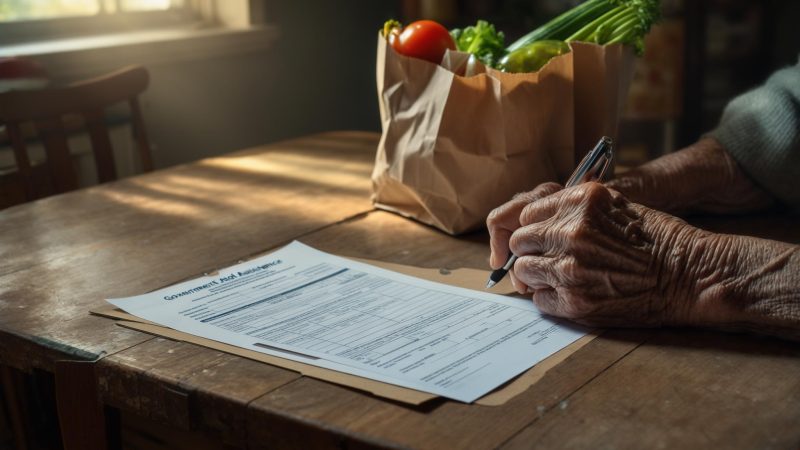
When I spoke with Patricia in early March 2026, she had submitted her LIHEAP application in January and received a $340 heating benefit — not enough to replace the furnace, but enough to cover the gas bill through February. She had gathered the paperwork for the Property Tax/Rent Rebate application but had not yet filed it.
The Section 504 grant application was the one she was most cautious about. “It feels like a lot of paperwork for something that might not come through,” she told me. “And I don’t want to get my hopes up about the roof.”
The benefits counselor from the Area Agency on Aging had offered to help her complete the Section 504 application at no cost. As of our conversation, Patricia had scheduled that appointment for the following week. She was less certain about whether to call her son, who lives in Columbus and has offered repeatedly to contribute to the roof repair.
“I know what the smart thing is,” she said. “I’m just not ready to do it yet.”
The Larger Pattern Patricia Represents
Patricia Novak is not an unusual case. According to the National Council on Aging, roughly $30 billion in federal and state benefits go unclaimed each year by older Americans who either don’t know they qualify or don’t apply. The reasons vary — stigma, complexity, lack of outreach — but the result is the same: people who have paid into the system for decades don’t access what’s available to them.
Patricia’s situation also reflects a specific gap in retirement planning that affects federal workers. USPS employees under the Civil Service Retirement System, the older federal pension structure, do not receive Social Security credits for their postal earnings. Patricia’s Social Security benefit comes from a part-time job she held before joining USPS — it is modest. Her pension is the primary income, and it does not adjust for inflation at the same rate as Social Security’s annual cost-of-living adjustment.
When I left her house that afternoon, Patricia was standing in the doorway with the coupon bin tucked under her arm. She had an errand to run — the Giant Eagle in Carnegie, twenty minutes away. She said she’d call the Area Agency on Aging to confirm her appointment time.
Whether the Section 504 grant comes through, whether the roof gets fixed this year or next, whether she eventually accepts her son’s help — none of that was resolved when I filed this story. What had changed, Patricia told me, was smaller than that. “I at least know what’s out there now,” she said. “That’s something. That’s more than I had before.”
Related: She Worked 32 Years for USPS and Still Can’t Afford a New Roof — Patricia Novak’s Fixed-Income Reality


Leave a Reply