
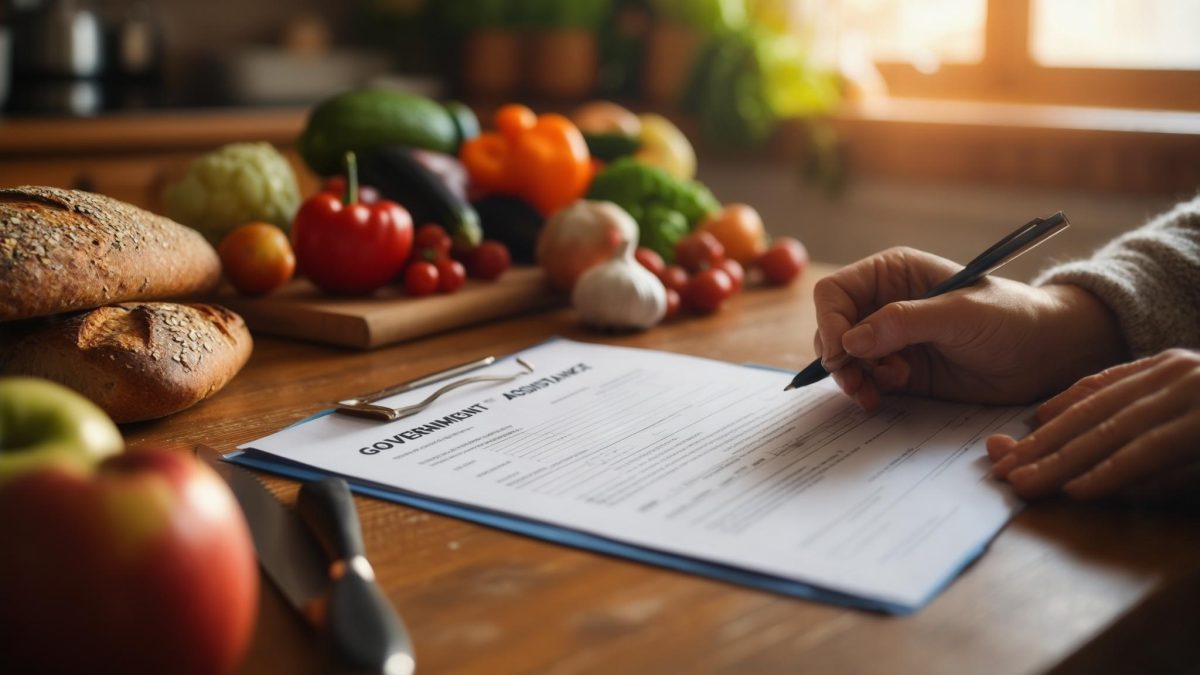
Maria, a 34-year-old home health aide in Columbus, Ohio, applied for SNAP benefits in January 2025 after her hours were cut nearly in half. She was rejected — twice. Both denial letters cited vague “income calculation” issues she didn’t understand. On her third attempt, armed with the right documentation and a clearer grasp of how the program actually calculates eligibility, she was approved for $287 a month. Her story is not unusual.
SNAP — the Supplemental Nutrition Assistance Program — serves roughly 42 million Americans, yet denial rates remain stubbornly high, particularly among first-time applicants. The rules around income limits, deductions, and household composition are specific enough that small errors on an application can trigger an automatic rejection. This guide walks through the five eligibility rules that most commonly cause denials, how they work in 2026, and what to do if you’ve already been turned down.
Rule 1: Gross Income vs. Net Income — They Are Not the Same Thing
Most applicants assume SNAP eligibility is a simple income cutoff. It’s not — the program uses two separate income tests, and failing to understand both is the single most common reason for denial.
The gross income test requires that your household’s total monthly income before deductions falls at or below 130% of the federal poverty level. For fiscal year 2026, that means a single-person household must earn no more than $1,580 per month, and a family of four no more than $3,250 per month. These figures are set by USDA’s SNAP eligibility guidelines.
The net income test applies after allowable deductions are subtracted from gross income. Net income must fall at or below 100% of the federal poverty line. This is where applicants who initially appear ineligible can actually qualify — and where most people leave money on the table by not claiming every deduction available to them.
- Standard deduction: A flat deduction applied to all households ($204/month for households of 1-3 in 2026)
- Earned income deduction: 20% of earned income is automatically deducted
- Dependent care deduction: Costs for childcare or adult care while you work or attend training
- Medical expense deduction: For elderly or disabled household members, out-of-pocket medical costs above $35/month
- Excess shelter deduction: Housing costs that exceed 50% of net income after other deductions
Rule 2: The Asset Limit Catches People Off Guard
SNAP is not only an income-based program. Most households are also subject to a resource (asset) limit, and exceeding it will result in an automatic denial regardless of income.
For 2026, the standard resource limit is $2,750 for most households, or $4,250 for households that include a person who is age 60 or older or has a disability. These limits apply to countable assets — primarily cash, checking accounts, and savings accounts. Not everything counts.
Assets that are excluded from the resource test include your primary home, one vehicle (in most states), retirement accounts, and most pension funds. A second vehicle, however, often counts — which surprises many two-car families. Additionally, roughly 40 states now use broad-based categorical eligibility (BBCE), which eliminates the asset test entirely for households that receive certain other low-income benefits. Check your state’s rules before assuming you’re over the limit.
Rule 3: Household Definition Determines Everything
SNAP defines a “household” based on who buys and prepares food together — not simply who lives under the same roof. Getting this definition wrong on an application can either disqualify you or reduce your benefit far below what you’re entitled to.
If a college student lives at home but buys their own groceries separately from their parents, they may be a separate SNAP household. Conversely, if two unrelated roommates share food costs, they must apply as a single household. The distinction matters enormously because household size directly controls both the income thresholds and the maximum benefit amount.
There are also mandatory household inclusion rules. Spouses living together must always be in the same SNAP household. Children under 22 living with a parent are generally included in the parent’s household, even if they purchase food separately. Understanding these rules before you fill out Section 2 of the application can prevent a rejection before it happens.
Rule 4: Work Requirements Apply to More People Than You Think
Able-bodied adults without dependents (ABAWDs) between the ages of 18 and 52 face stricter rules. If you fall into this category, you must work or participate in a qualifying work program for at least 80 hours per month, or you’ll be limited to just three months of SNAP benefits in any 36-month period.
The Biden administration raised the ABAWD age limit from 49 to 52 through the 2023 Farm Bill provisions, meaning more people are now subject to this rule. However, exemptions exist and are frequently overlooked. You are exempt from ABAWD rules if you are:
- Medically certified as physically or mentally unfit for employment
- Caring for a child under 18 or a dependent incapacitated adult
- Pregnant
- A student enrolled at least half-time in a recognized program
- Participating in a drug or alcohol treatment program
- Living in an area with a USDA-approved waiver due to high unemployment
Rule 5: Immigration Status and Citizenship Rules Are Complex
Non-citizens face a separate eligibility framework that operates independently from income and asset rules. Many legal permanent residents are eligible, but the specific rules depend on when they arrived in the United States and their visa category.
Most lawful permanent residents (green card holders) who have been in the country for at least five years are eligible, as are refugees, asylees, and victims of trafficking regardless of the five-year bar. Children under 18 who are lawfully present may qualify regardless of their parent’s status, and their eligibility does not affect any immigration applications for the parent. Undocumented immigrants are not eligible for federal SNAP, though some states administer their own parallel nutrition programs.
What to Do If You’ve Already Been Denied
A denial letter is not the end. Under federal law, every SNAP applicant has the right to a fair hearing — a formal review of the denial decision. You have 90 days from the date of the denial notice to request one, though requesting sooner is always better.
If you believe an error was made and the hearing is still pending, you can also simply submit a new application with corrected information. There is no penalty for reapplying. According to USDA’s SNAP applicant resources, state agencies must process applications and provide a written decision within 30 days of receipt, or within 7 days for expedited benefits if you qualify.
Final Verdict: The Rules Favor Those Who Know Them
SNAP eligibility is genuinely complex — but it’s navigable. The five rules covered here (gross vs. net income, asset limits, household definition, work requirements, and immigration status) account for the vast majority of avoidable denials. Most applicants who are denied the first time and reapply with corrected documentation and a clearer understanding of deductions are ultimately approved.
If you’re starting fresh, apply through your state’s online portal (linked from Benefits.gov) and document every deduction you’re entitled to before submitting. If you’ve already been denied, read that denial letter carefully — it is telling you exactly what to fix.
Related: He Got a $9,000 Raise at 31 and Lost His SNAP Benefits the Same Month
Related: I Almost Left $3,200 on the Table — These 5 Federal Relief Benefits Are Still Open in April 2026




Leave a Reply