
The Quiet Earthquake: How SNAP’s Funding Structure Is Shifting
Read more: SNAP Benefits Guide: Eligibility, Amounts, How to Apply
Are you still buying the same groceries with your SNAP card you were buying last year — or did the rules just change without anyone telling you?
That question kept me up at night in early . I’d been helping a friend navigate her benefits, and suddenly the news was full of headlines about work requirements, candy bans, and a bill called the “One Big Beautiful Bill.” None of it felt clear. So I spent weeks tracking every confirmed change, deadline, and dollar amount.
Here’s what I found — and what it means for you right now.
For decades, the federal government paid 100% of SNAP food benefit costs. States only covered administrative expenses. That structure is now being challenged, with proposals shifting some food benefit costs to states for the first time.
States now face new choices about whether to absorb those costs, reduce their own programs, or find other ways to close the gap. That’s not a minor accounting adjustment. That’s a fundamental redesign of who is responsible for feeding low-income Americans.
(I kept thinking about my friend in Nevada when I read this. She works part-time and has two kids. A state-level funding shortfall could mean her benefit amount drops — not because her income changed, but because her state’s budget did.)
States are actively responding to these new federal requirements, each making different decisions about implementation timelines and local rules.
Expanded Work Requirements: Who Has to Prove Employment Now
New federal rules for SNAP expand work requirements and cut some exemptions that previously protected certain recipients.
The old rules required able-bodied adults without dependents — called ABAWDs — to work or participate in job training for at least 20 hours per week. The new rules extend those requirements further up the age ladder.
Older adults who previously had exemptions from work requirements now face new expectations about proving employment or participation in qualifying activities. In context: that 20-hour weekly requirement is roughly the equivalent of two and a half standard workdays — a real barrier for people managing health issues or caregiving responsibilities.
In Nevada alone, thousands of recipients who cannot prove they are working at least 20 hours a week could lose their monthly food assistance by the end of the month, with new requirements starting .
Nevada is not alone. Similar timelines are rolling out across the country.
Texas Candy and Soda Ban: What the Lone Star State Is Blocking in 2026
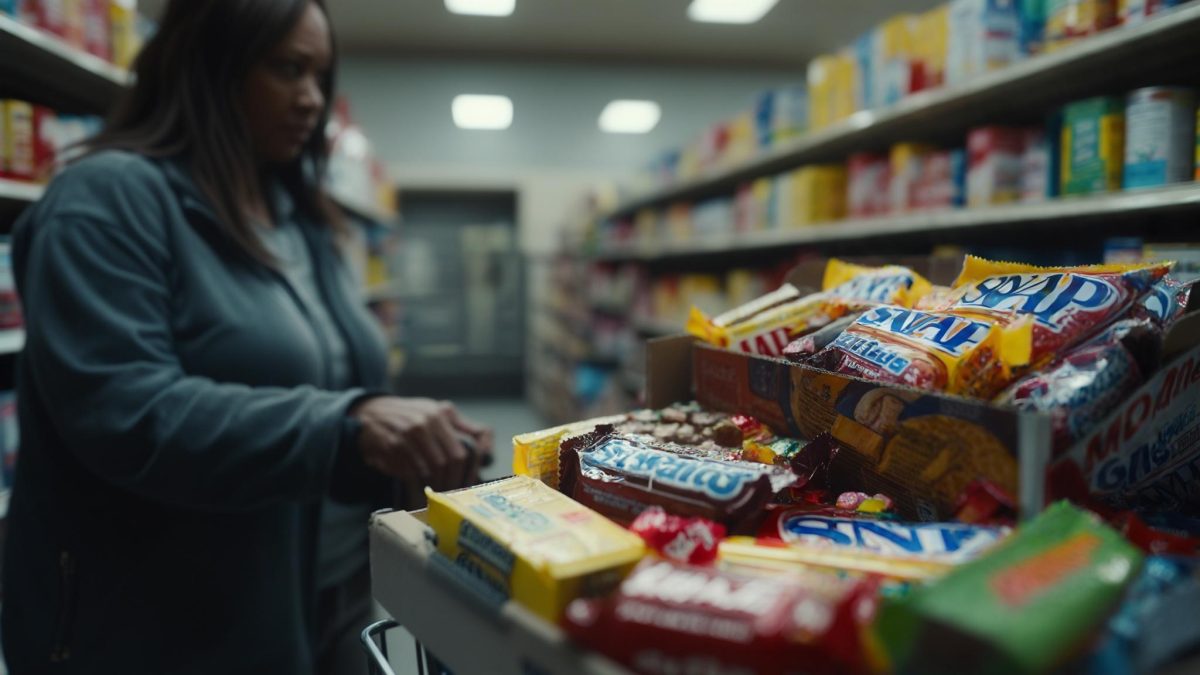
While federal changes dominate the national conversation, Texas made its own headline-grabbing move: a state-level push to ban the purchase of candy and sugary sodas using SNAP benefits. If approved by federal waiver, Texas would become the first state to successfully implement such a restriction at scale.
The proposed Texas ban would prohibit SNAP recipients from using their benefits to purchase items including:
- Candy and confections (including chocolate bars, gummy candies, and hard candy)
- Sodas and sugar-sweetened beverages exceeding a defined sugar threshold
- Energy drinks classified as food rather than supplements
Supporters argue the restriction would steer approximately $500 million in annual Texas SNAP spending toward more nutritious foods. Critics — including anti-hunger advocates and grocery industry groups — counter that the ban is paternalistic, administratively unworkable at checkout, and would disproportionately burden low-income shoppers who already face limited food access.
The practical challenge is real: grocery store point-of-sale systems would need to distinguish SNAP-eligible candy from, say, a granola bar with comparable sugar content. That line is not always obvious, and enforcement errors could result in legitimate purchases being declined at the register.
As of , Texas had submitted a formal waiver request to the U.S. Department of Agriculture. Federal approval is required before any restriction can take effect. Other states — including Arkansas and West Virginia — have signaled interest in pursuing similar waivers if Texas succeeds.
What SNAP Still Covers: 7 Categories You Can Always Buy
With so much noise about what’s being restricted, it’s worth being clear about what SNAP still covers — and will continue to cover under current federal law.
SNAP does not cover alcohol, tobacco, vitamins, medicines, hot prepared foods, or non-food household items like soap and paper products. Those rules have not changed in 2026.
The “One Big Beautiful Bill” and $230 Billion in Proposed SNAP Cuts
The legislative backdrop to all of these changes is a sweeping budget reconciliation package informally dubbed the “One Big Beautiful Bill” — a proposal moving through Congress in early 2026 that would represent the largest single reduction to SNAP funding in the program’s history.
Key provisions under discussion include:
- Requiring states to fund between 5% and 25% of SNAP food benefit costs, depending on their error rates — a first in program history
- Cutting an estimated $230 billion from SNAP over 10 years, according to Congressional Budget Office projections
- Expanding ABAWD work requirements to cover adults up to age 64, up from the previous cutoff of 49
- Eliminating broad-based categorical eligibility, which currently allows states to extend SNAP to households slightly above the federal poverty line
If enacted in its current form, independent analysts estimate the bill could remove SNAP benefits from approximately 8 to 11 million people over the next decade. Food banks and anti-hunger organizations have warned they do not have the capacity to absorb that level of need.
How to Protect Your SNAP Benefits During the 2026 Transition Period
The single most important thing you can do right now is contact your state SNAP agency before your next recertification date — not after. Changes are being implemented on rolling timelines, and many recipients are finding out about new requirements only when their benefits are interrupted.
Here are five concrete steps to take today:
- Verify your recertification date. Log into your state benefits portal or call your caseworker. Recertification windows are typically 30 days — missing them means losing benefits even if you’re still eligible.
- Document your work hours now. If you’re working, collect pay stubs, employer letters, or time sheets covering the past 30 days. Digital records are acceptable in most states.
- Ask specifically about age-based exemptions. If you’re between 50 and 64, ask your caseworker in writing which exemptions currently apply to your case. Get the answer in writing.
- Check your state’s cost-sharing response. Some states are supplementing federal benefits with state funds; others are not. Your state’s SNAP website should have a policy update page.
- Contact a local legal aid organization if your benefits are cut. Many cuts are being appealed successfully. You have the right to a fair hearing within 90 days of any adverse action.
The average SNAP benefit in 2026 is approximately $187 per person per month — money that represents real food security for millions of households. Losing it without warning is not just inconvenient; for many families, it’s a crisis.



Leave a Reply