
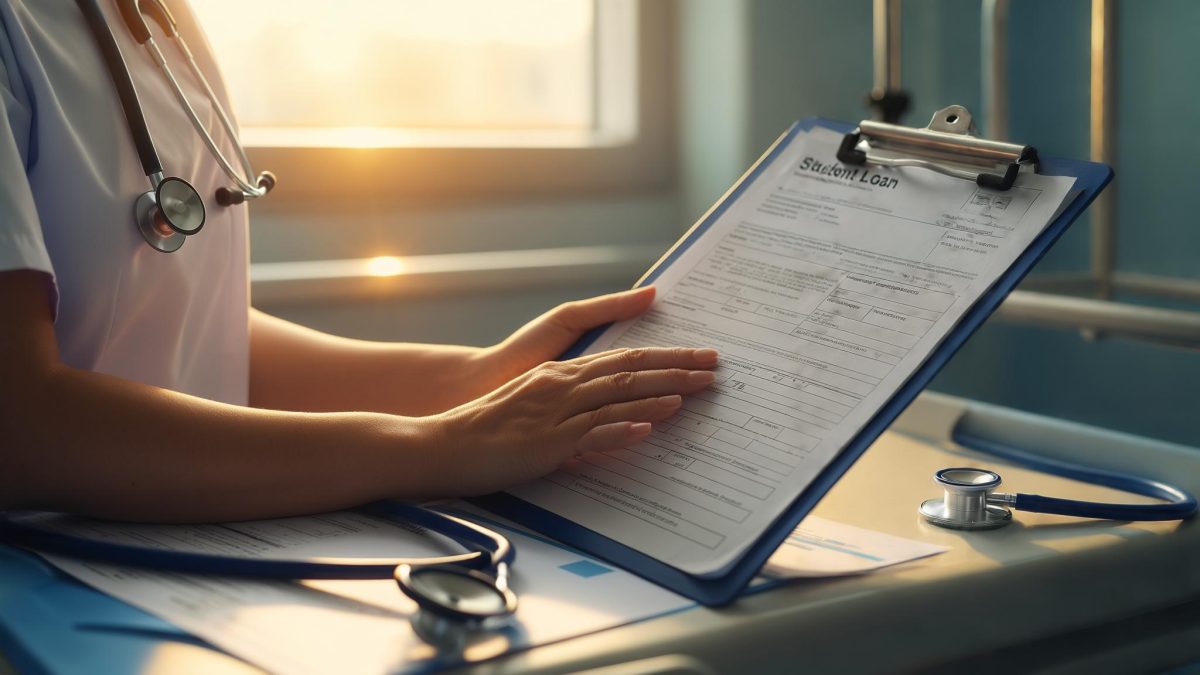
The Public Service Loan Forgiveness program’s rules have shifted repeatedly since 2021, and as of early 2026, a narrow window remains for borrowers to consolidate certain older loans before potentially losing qualifying payment credit. For nurses, teachers, and social workers carrying federal student debt, the difference between acting now and waiting can mean tens of thousands of dollars. When I drove out to meet Samantha Reeves at a coffee shop near her Denver apartment on a Tuesday morning — her first day off after a six-day stretch of shifts — she had a folder of printed loan statements on the table before I even sat down.
A Salary That Doesn’t Feel Like One
Samantha Reeves is 31 years old, a registered nurse at a community hospital on Denver’s north side, and the sole financial provider for herself and her seven-year-old daughter, Marisol. On paper, her income looks manageable. In practice, Denver’s cost of living consumes it before she can blink.
Daycare for Marisol runs $1,400 per month — nearly what Samantha pays in rent for their two-bedroom apartment. Her nursing school loans total approximately $38,000. Her ex-partner left two years ago and has provided no financial support. She picks up overtime when she can, but she told me she is starting to feel the wear of it.
She is not living in poverty by federal definitions. But she earns too much to qualify for most means-tested assistance programs, and too little to feel financially secure in one of the country’s more expensive mid-sized cities. Her $38,000 in federal student loans sat on income-driven repayment, accumulating interest quietly in the background while she focused on getting through each week.
How She Found Out About PSLF — and What She Got Wrong
Samantha told me she first heard about the Public Service Loan Forgiveness program from a colleague in the break room sometime in late 2023. The concept seemed straightforward enough: work for a qualifying employer, make 120 on-time payments on an eligible repayment plan, and the remaining federal loan balance is forgiven tax-free. Nonprofit hospitals, including the community hospital where Samantha works, are among the qualifying employers listed by the Federal Student Aid office.
She assumed she was already on track. She had been making payments since she graduated. She had been working at a nonprofit hospital. She figured three years of payments were already in the bank, meaning she was nearly a third of the way to forgiveness.
When she finally logged into the PSLF Help Tool on StudentAid.gov in early 2025 and submitted an Employment Certification Form, the count that came back stopped her cold.
The reason, as she eventually pieced together through a call with her loan servicer, was her repayment plan. She had been on a graduated repayment plan — a common default option — which is not an eligible plan for PSLF. Only income-driven repayment plans and the standard 10-year plan qualify. None of her prior payments had counted toward the 120-payment threshold.
Switching Plans and Starting the Clock Over
After her initial shock, Samantha did what she described to me as “the thing I always do when I’m exhausted — I made a plan.” She switched to the SAVE plan (Saving on a Valuable Education), an income-driven repayment option introduced by the Department of Education in 2023 as a successor to REPAYE. Under SAVE, her monthly payment dropped significantly based on her discretionary income calculation.
What complicated her situation was the legal limbo surrounding SAVE itself. By the time we spoke in early 2026, the SAVE plan had been subject to ongoing federal court challenges, and the Federal Student Aid office had placed many SAVE enrollees in an administrative forbearance while litigation continued. Payments made during this forbearance period do not count toward PSLF under standard rules, though the Department of Education has issued guidance on certain exceptions.
Samantha told me she called her loan servicer three times in a single month trying to understand what the forbearance meant for her count. Each call produced slightly different answers. She eventually connected with a nonprofit student loan counselor through a program run by a local credit union, who helped her understand her options more clearly — though even that counselor acknowledged the landscape was unusually uncertain.
What She Is Doing Now — and What She Wishes She Had Done Earlier
When I asked Samantha what she would tell another nurse who was just starting out, she paused for a long moment before answering.
As of early 2026, Samantha has switched from SAVE to the Income-Based Repayment plan, which remains legally uncontested and whose payments do count toward PSLF. Her monthly payment under IBR is approximately $290 based on her current income, down from the roughly $410 she was paying on the graduated plan. The difference goes toward Marisol’s after-school program fees.
She resubmitted an updated Employment Certification Form in February 2026 and is waiting on confirmation of her qualifying payment count. She has approximately nine to ten years of payments remaining before she would reach the 120-payment threshold — which places potential forgiveness around 2035, when Marisol will be in high school.
The outcome is not the clean resolution Samantha had briefly hoped for. She is not on the verge of having her debt erased. She is at the beginning of a decade-long process, and she knows the program’s rules could shift again before she crosses the finish line. What has changed is her clarity — and her anger at how complicated a program designed to help public servants turned out to be in practice.
The Larger Picture for Public Service Borrowers
Samantha’s experience is not unusual. According to data from the Federal Student Aid PSLF Data Center, the program’s approval rate has historically been low — in earlier years falling below 5% for applications submitted — largely because borrowers had been on ineligible repayment plans or had ineligible loan types without realizing it. Reforms in 2022 and 2023 improved those numbers, but confusion about eligibility remains widespread.
The eligible and ineligible plan landscape is worth understanding in concrete terms. The table below reflects the current framework as of early 2026:
For borrowers like Samantha who hold FFEL loans — an older federal loan type that predates the current Direct Loan system — consolidation into a Direct Loan is required before any PSLF progress can begin. The Department of Education has in the past offered limited windows for retroactive credit upon consolidation; those windows have opened and closed several times, and their future availability is not guaranteed.
What I noticed, watching Samantha close her folder of loan statements and finish the last of her coffee, is that she was not defeated. She was tired in the way that people who carry a lot get tired — not from hopelessness, but from the continuous expenditure of energy that keeps things from falling apart. She had a plan. She was not sure it would work. She was going to follow it anyway, between shifts, after Marisol went to bed, in whatever minutes the week surrendered to her.
That is the reality of public service loan forgiveness for many of the people it was designed to help: a worthwhile destination at the end of a genuinely difficult road, marked with signs that have changed more than once along the way.
Related: His Auto Shop Survived 18 Years. Then Computerized Cars Arrived — and Now He Has Nothing Saved at 52




Leave a Reply