
In early February 2026, I came across a post in a Facebook group nominally dedicated to retirees navigating government benefits. The poster was clearly not retired. Benny Chen-Ramirez, 28, had written a short, blunt message: “Anyone in Alabama know how to get help fixing a roof when you make $18 an hour and have zero insurance? I keep getting turned away.” I sent him a direct message that same afternoon. He responded within an hour.
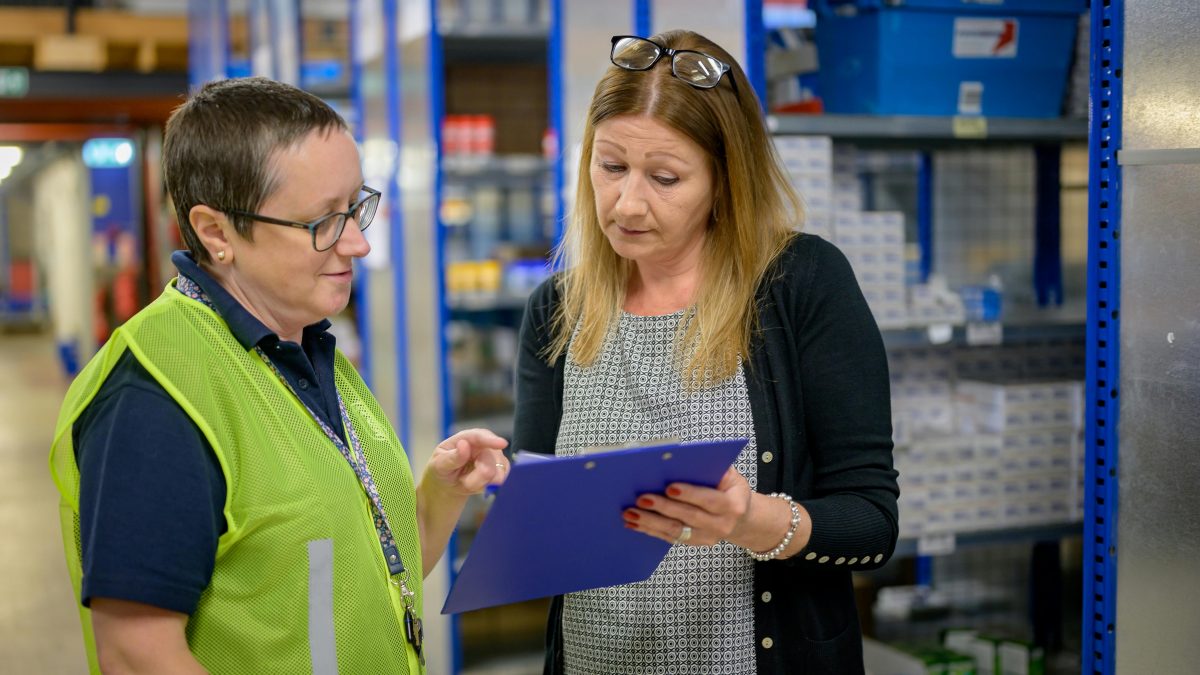
When I spoke with Benny over two video calls in late February and early March 2026, what struck me immediately was how matter-of-fact he was about a situation most people would find overwhelming. He works as a warehouse supervisor for a logistics company in Birmingham. His fiancée, Maya, is finishing her undergraduate degree and not yet earning an income. Between the two of them, Benny’s take-home pay of roughly $2,640 a month is their only source of income.
A Home That Was Slowly Falling Apart
Benny and Maya rent a small bungalow in Birmingham’s Ensley neighborhood. The landlord is a relative, which kept rent low — $650 a month — but also made the situation complicated. When the roof began leaking in September 2025, the relative-landlord told Benny he could either fix it himself or find somewhere else to live.
A licensed roofer quoted Benny $7,400 for a full repair. A second quote came in at $6,900. Either number was impossible on a budget already stretched thin by Maya’s tuition costs and Benny’s own student loan payments of $210 a month.
On top of the roof, Benny’s employer does not offer health insurance. His company employs fewer than 50 workers, which means it is not legally required to provide coverage under the Affordable Care Act. Benny had gone without insurance for roughly 14 months before our first conversation.
The First Two Rejections — and What Went Wrong
Benny first applied for the Alabama HOME Investment Partnerships Program in October 2025, a federally funded initiative that can provide repair assistance to low-income homeowners. His application was rejected quickly: the program requires the applicant to own the home. Because Benny rents, even from a family member, he did not qualify.
His second attempt came in November 2025, when he applied to a local community development organization offering emergency repair grants. That application stalled for six weeks before he received a letter stating he exceeded the program’s gross income threshold of $31,000 annually. Benny’s gross income in 2025 was approximately $34,700.
Benny told me he spent roughly four hours a week for two months researching programs, cross-referencing eligibility rules, and filling out forms. “I kept finding programs that sounded perfect until I read the fine print,” he said. “Either I don’t own the property, or I make $3,000 too much. It starts to feel like you’re being punished for showing up to work.”
Where Things Finally Shifted
The turning point came in late January 2026, when a member of the same Facebook group pointed Benny toward the HUD housing assistance portal and, more specifically, toward the FEMA Individuals and Households Program. Although FEMA’s IHP is primarily a disaster-relief mechanism — it has been extended through February 28, 2027, per FEMA’s February 2026 fact sheet — it pointed Benny toward a broader directory of state and local resources he hadn’t found on his own.
That same search led him to Alabama Medicaid. Benny had assumed his income disqualified him. As he explained to me, he had never looked up the actual numbers. Alabama’s standard Medicaid income limit for an adult in a two-person household sits at approximately 138 percent of the federal poverty level — roughly $23,000 annually for a household of two under expanded eligibility. Benny was over that threshold. But Alabama had not fully expanded Medicaid under the ACA, meaning the coverage gap remained a real barrier for adults without children in the state.
The Outcome — Mixed, But Real Progress
By March 2026, Benny had made concrete gains on one front and was still waiting on another. Through a Community Development Block Grant administered by the City of Birmingham, he was approved for a zero-interest deferred loan of $5,500 toward the roof repair. The remaining balance — approximately $1,400 — he covered by drawing down a small savings account he and Maya had been building for their wedding.
Health coverage remains unresolved. Benny is currently uninsured and enrolled in nothing. He told me he looked at ACA marketplace plans and found the lowest-cost option in his area would run approximately $187 a month after his estimated subsidy — a number that, he said quietly, “just doesn’t fit right now.”
When I asked Benny what he wished he had known sooner, he didn’t hesitate. “That the same program that rejects you will tell you about other programs if you ask. The rejection letter for the HOME program had a number at the bottom. I ignored it for two months. That number led me to the CDBG loan.”
What Benny’s Story Reflects About the System
Benny’s experience is not unusual among working adults in the 25–35 age range without employer benefits. States across the country are grappling with how to serve people who fall just above traditional eligibility thresholds. According to a Kentucky Center for Economic Policy analysis of the 2026–2028 state budget, housing and healthcare gaps for low-wage workers remain among the most persistent funding challenges in state policy.
Benny is still engaged, still working, and still optimistic in a way that I found genuinely disarming. He said Maya’s degree program ends in December 2026. After that, they plan to revisit insurance options as a household. Whether that will actually close the gap depends on income changes neither of them can predict right now. For the moment, the roof holds.



Leave a Reply