
Most people assume student loan debt is a young person’s crisis. The image is familiar: a 24-year-old with a liberal arts degree and a barista job, buried under six figures of federal debt. But that assumption leaves out millions of older Americans — people who borrowed later in life, who made payments for years before falling behind, who are now watching retirement savings erode alongside their paychecks. Sylvia Uribe is one of them.
I first heard Sylvia’s voice on a Tuesday afternoon in February 2026. She had called into Money Matters Chicago, a weekly public radio segment that fields listener questions about government benefits and financial hardship. Her question was brief and measured — she asked whether someone in default on federal student loans could be garnished even if they were already living paycheck to paycheck. The host gave a vague answer. I wrote down her first name and called the station’s producer the next morning.
Two weeks later, I sat across from Sylvia Uribe at a diner near her apartment in Chicago’s Pilsen neighborhood. She arrived exactly on time, ordered coffee, and folded her hands on the table like she was bracing for a difficult conversation. She is 60 years old, widowed, and has worked as a licensed dental assistant for nearly three decades. Her two adult children live out of state. She does not ask them for help. That much became clear within the first five minutes.
The Debt She Thought She Could Outlast
In 2014, at age 48, Sylvia enrolled in a part-time graduate program in healthcare administration at a small Illinois university. Her husband had just been diagnosed with a chronic illness, and she was thinking about a career shift — something with more stability, better hours, a path away from standing on her feet for eight-hour dental shifts. She borrowed $47,200 in federal Direct Loans to cover tuition and some living expenses over three years.
Her husband died in 2017, the same year she finished her degree. She never made the career transition. Grief, disrupted finances, and the reality of single-income life in Chicago pulled her back to dental assisting — the work she knew, the work that paid reliably, even if not generously. Her annual salary sits at approximately $41,500. After rent, utilities, and basic expenses, there was not much left for loan payments.
She made sporadic payments between 2018 and 2021, then stopped entirely. “I kept telling myself I’d figure it out when things settled down,” she told me. “Things never really settled down.” By late 2021, her loans had entered default — the federal threshold is 270 days of nonpayment, according to Federal Student Aid. She received notices. She set them aside.
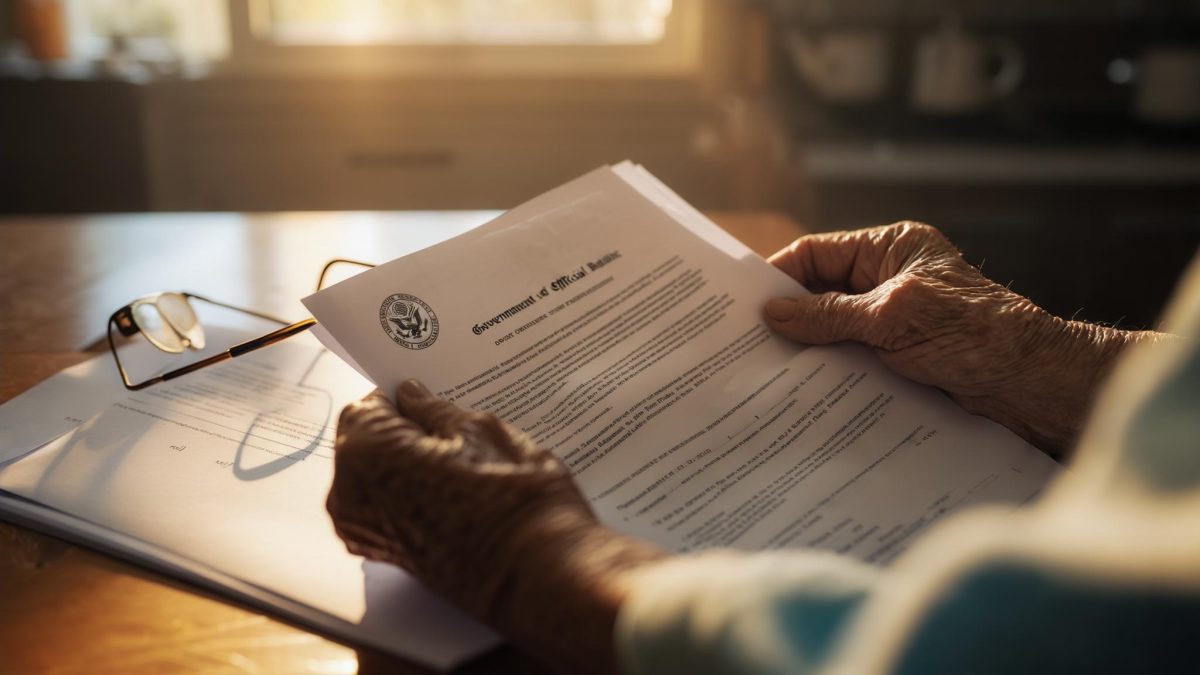
In January 2026, she received something she could not set aside: a formal Administrative Wage Garnishment notice from a federal loan servicer, informing her that 15 percent of her disposable earnings would be withheld beginning the following month. On her salary, that translated to roughly $430 per month — gone before she touched her paycheck.
What the Garnishment Actually Meant
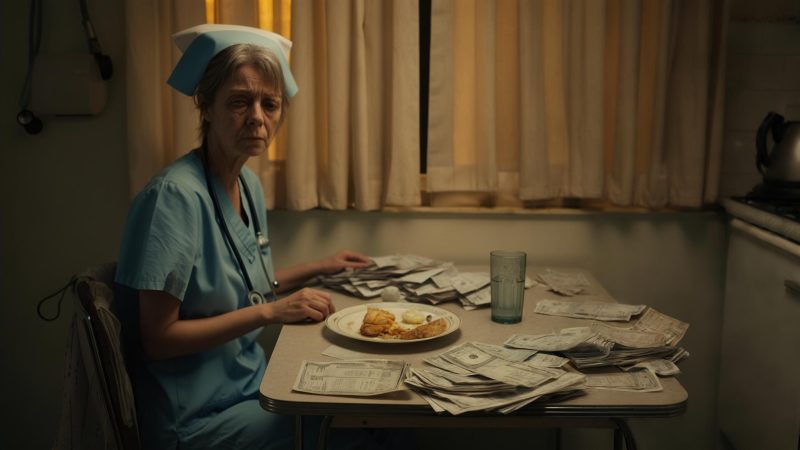
When I asked Sylvia to describe the moment she understood what the letter meant, she was quiet for a few seconds. “I did the math on a napkin at my kitchen table,” she said. “I realized I’d be taking home less than I was in 2009. I’m 60 years old. I’m going backward.”
Federal wage garnishment for defaulted student loans does not require a court order. The U.S. Department of Education — or a guaranty agency acting on its behalf — can issue an administrative garnishment order directly to an employer. The employer is legally required to comply. For Sylvia, that meant her dental office received paperwork about her debt before she had told a single coworker she was in financial trouble.
The embarrassment of that, she said, was almost worse than the money. “I’ve been at that office for eleven years. I’m proud of the work I do. Having to explain to my office manager why part of my check is being withheld — that was a very hard conversation.”
The Programs She Didn’t Know Existed
This is where Sylvia’s story becomes something other than a cautionary tale — though it is still partly that. After the radio call, she had connected with a nonprofit credit counselor through a community referral. What she learned in that meeting reframed what she thought her options were.
Sylvia had not heard of loan rehabilitation. Under the federal rehabilitation program, a borrower in default can make nine voluntary, reasonable, and affordable monthly payments within a ten-month period — and their loan is returned to good standing, with the default removed from their credit report. The payment amount is calculated at 15 percent of discretionary income, and for Sylvia’s income level, the counselor estimated her monthly rehabilitation payment would be approximately $89 — a fraction of the $430 being garnished.
She also learned about income-driven repayment (IDR) plans, which cap monthly federal loan payments at a percentage of discretionary income. According to Federal Student Aid, borrowers who complete rehabilitation and re-enter repayment can typically enroll in an IDR plan immediately. For Sylvia, that would likely mean a monthly payment below $100 — and potentially loan forgiveness after 20 to 25 years of qualifying payments, though she acknowledged that timeline extends past her planned retirement.
“The counselor told me that for someone my age, even a five-year plan matters,” Sylvia said. “It’s not about wiping everything out. It’s about not having money taken out of my check every two weeks for the rest of my working life.”
What Changed — and What Didn’t
By the time I met with Sylvia in late March 2026, she had submitted her rehabilitation agreement and received written confirmation that the garnishment was paused pending processing of her application. Her first voluntary monthly payment of $89 was scheduled for April 15th. It was not a resolution — it was a beginning.
There are real limits to what the rehabilitation program accomplishes. It removes the default notation from a credit report, but the debt itself does not disappear. Sylvia’s balance, now grown to approximately $54,800 with accrued interest, will follow her into income-driven repayment. Depending on which IDR plan she qualifies for and how federal repayment policy evolves — something that has shifted substantially in recent years, including ongoing legal challenges to various repayment plan structures — her long-term outcome is genuinely uncertain.
She is also navigating other financial pressures. When she mentioned on the radio call that she was helping cover costs for a grandchild’s occasional childcare while her daughter was between jobs in 2025, it came through as an aside. But those contributions — roughly $300 a month for about seven months — had drawn down a small emergency savings account she had been building since 2022. She rebuilt it to about $1,100 before the garnishment notice arrived.
She told me she had not yet looked into whether she might qualify for SNAP. Her income — $41,500 a year before garnishment — likely places her near or slightly above the federal gross income limit for a single-person household, which according to USDA Food and Nutrition Service sits at 130 percent of the federal poverty level, or approximately $20,783 annually for one person in 2026. But with the garnishment reducing her take-home pay, a recalculation of her net income might alter that picture. It is something the credit counselor suggested she explore. She had not yet followed up.
What Sylvia’s Story Actually Tells Us
When I thanked Sylvia at the end of our conversation, she straightened up slightly — that particular posture of someone who has said more than they planned to. She paid for her own coffee. She made a point of it.
Her story does not have a clean ending. The rehabilitation payments are just starting. The long-term repayment math is complicated. She may or may not reach a forgiveness threshold before she retires. What shifted, she said, was not the numbers — it was the feeling of being in motion rather than in avoidance.
There are an estimated 7.5 million federal student loan borrowers who were in default or severely delinquent entering 2026, according to figures tracked by the Department of Education’s Office of Federal Student Aid. A substantial portion are borrowers over 50 — people who borrowed for second careers, for graduate programs, for their children, and who found that the economic math never worked out the way they expected.
Sylvia Uribe is one of them. She called into a radio show because she wanted one answer to one question. What she got was a reminder that the system, however imperfect, does contain paths out of the hole — if you know to look for them, and if you are willing to pick up the phone before the garnishment notice forces your hand.
“I wish I’d done this at 55,” she said, pulling on her coat. “I wish I’d done it at 50. But here I am.”
Related: Wage Garnishment, a Failing Roof, and No Safety Net: Inside One Family’s Struggle to Hold On
Related: She Was Dropped by Her Insurer and Hit With a 30% Rent Hike at 67 — What One Oklahoma Retiree Found When She Finally Asked for Help



Leave a Reply